(reclame)

Je
recente release (muziek, boek of wat dan ook) gerecenseerd op onze website?
Stuur deze dan naar de hoofdredactie! |
24 juni
2026

CD Recensies
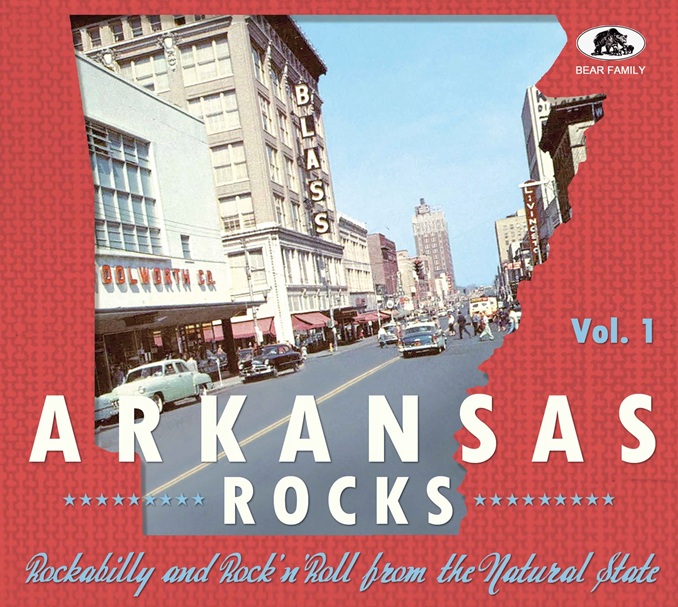
ARKANSAS
ROCKS Vol. 1
Eind vorig jaar was er al Chicago Rocks Vol. 1 BCD17771 (volume 2
is nog niet verschenen), nu wordt geen stad maar een staat in de kijker
gezet, Arkansas, dat als buurstaat van Tennessee best wat linken heeft
met Memphis, in die mate zelfs dat er anno nu het stuk autostrade
dat Arkansas en Tennessee verbindt officieel is omgedoopt tot Rockabilly
Highway. Zo kwamen Johnny Cash, Sonny Burgess, Billy Lee Riley, Conway
Twitty en Narvel Felts allemaal uit Arkansas alvorens te verkassen
naar waar de muziek hen zou leiden, en dat was vaak als eerste stop
muziekstad Memphis. Zij staan niet op deze CD, wel minder bekende
goden, met als gemeenschappelijke noemer dat alle 25 tracks (op Chicago
Rocks stonden er tien meer) verschenen op labels uit Arkansas en er
bijna allemaal werden opgenomen. De bekendste artiesten zijn Eddie
Bond waarover zo dadelijk meer, Larry Donn met zijn verschroeiende
piano stomper That's What I Call A Ball, en Bobby Lee Trammell wiens
Arkansas Twist toepasselijk de CD opent. Twist, ja, maar vooral de
betere twist rocker en daarmee ten zeerste representatief voor het
soort rock 'n' roll energie die we te horen krijgen op deze CD die
vooral uitpakt met rechtdoor gitaar rock 'n' roll (veel saxofoons
hadden ze blijkbaar niet in Arkansas) als Earl Smith & the Night
Cappers' Black River Bay dat begint met de riff van What'd I Say en
Kenny Owens' Long Lost John, een van de nummers opgesierd met een
swingende piano solo, in het geval van Long Lost John ingespeeld door
Larry Donn. Een ander nummer met piano is Little More Lovin' van Chuck
Comer, en dat alles wordt uiteraard aangevuld met uptempo Johnny Cash
bop (Moonshine van Montie Jones), rockabilly (Little Judy van Charley
Maybee, I Don't Dig It van Mike McAllister), rockabilly stop-start
strolls (Coffee Baby van Buddy Phillips met op piano Teddy Redell)
en gitaarstrollers (Please Please Baby van Bobby Brown). Bijna al
die nummers drijven op basgitaar: de contrabassen zijn duidelijk in
de minderheid, misschien omdat bijna driekwart van de nummers van
1960 of later zijn, dat laatste dan weer misschien omdat een echte
platenindustrie in Arkansas pas op gang kwam vanaf pakweg 1957 in
het kielzog van het succes van Memphis als muziekstad. Zangeres Tonya
Dee haalt in Shake This Town zelfs een orgeltje boven dat het niet
kan winnen van de immer voortrockende gitaren, en Ken & the Goldtones'
If Somebody Loves You uit 1964 is sixties rock 'n' roll met bijna
beatzang. Toch lijkt het anderzijds of ze zelfs toen nog wat achter
liepen in Arkansas: Every Time I See You van Sylvia Mobley, eveneens
uit 1964, heeft elektrische bas maar is wel degelijk rockabilly country.
In alle gevallen levert dit opwindende muziek op, want zelfs late
jaren '50 pogingen tot beschaafde teen rock 'n' roll van Johnny Tolleson
(You're In Love With Yourself, dezelfde Johnny Tolleson die vier demos
opnam voor doch wellicht niet bij Sun Records die helaas nooit tot
een release op Sun hebben geleid), Jimmy Ford (You're Gonna Be Sorry),
The Morgan Twins (Johnny Come Lately) en Leo Castleberry (het allesbehalve
blues Teen Age Blues) doen je speakers opbranden. Het valt op dat
de CD enkele songs bevat van heel wat later, wellicht omdat het covers
van jaren '50 nummers zijn: een Lonely Weekends met een huppelend
Sesamstraat arrangement en uptempo soul sax uit 1968 van ene Sonny
Deckelman die vocaal als een tweederangs Charlie Rich klinkt, en die
goeie ouwe rockin' daddy Eddie Bond met zijn in 1962 mogelijk in de
Sam Phillips Recording Studio in Memphis opgenomen laid back uptempo
country versie van bluesrock klassieker Big Boss Man. Wist u trouwens
dat de originele versie van One's All The Law Will Allow, bekend van
The Planet Rockers, opgenomen werd als medium tempo door Luke Royer
in 1973? Het bewijs hoort u hier, en het booklet vermeldt dat dat
nummer ook werd gecoverd door RJ & the Phantoms... niemand minder
dan onze eigen Hans Nelemans!
Late
last year saw the release of Chicago Rocks Vol. 1 (BCD17771) - volume
2 is not yet out - this time around the spotlight isn’t on a
single city but on an entire state, Arkansas. Neighboring Tennessee,
Arkansas has several ties to Memphis, so many in fact that the stretch
of highway connecting Arkansas and Tennessee has now been officially
named the Rockabilly Highway. Johnny Cash, Sonny Burgess, Billy Lee
Riley, Conway Twitty and Narvel Felts all hailed from Arkansas before
moving to wherever the music would eventually take them, and in many
cases their first stop was music city Memphis. None of them are on
this CD, but lesser known legends are, the common thread being that
all 25 tracks (Chicago Rocks had ten more) were released on Arkansas
labels and almost all were recorded there. The best known performers
are Eddie Bond about whom more later, Larry Donn with his scorching
piano stomper That’s What I Call A Ball, and Bobby Lee Trammell
whose aptly titled Arkansas Twist is the opening track. It's a twist,
yes, but above all it's a great twist rocker and thus highly representative
of the kind of rock ‘n’ roll energy we hear on the CD
which mainly delivers straightforward guitar driven rock ‘n’
roll (apparently they didn't have many saxophones in Arkansas) such
as Earl Smith & the Night Cappers' Black River Bay which starts
with the riff from What'd I Say, and Kenny Owens' Long Lost John,
one of the tracks graced with a swinging piano solo, in the case of
Long Lost John played by Larry Donn. Another track featuring piano
is Chuck Comer’s Little More Lovin’, and all of this is
complemented by uptempo Johnny Cash bop (Montie Jones’ Moonshine),
rockabilly (Charley Maybee’s Little Judy, Mike McAllister’s
I Don’t Dig It), rockabilly stop-start strolls (Buddy Phillips’
Coffee Baby with Teddy Redell on piano) and guitar strolls (Bobby
Brown’s Please Please Baby). Almost all of these songs are driven
forward by bass guitar, the double basses clearly in the minority,
perhaps because nearly 3/4 of the songs are from 1960 or later, the
latter perhaps because a real record industry in Arkansas didn’t
really get underway until around 1957 in the wake of Memphis’
success as a music city. Tonya Dee even brings along an organ in Shake
This Town that can’t hold a candle to the ever rockin' guitars,
and Ken & the Goldtones’ If Somebody Loves You from 1964
is sixties rock ’n’ roll with almost beat vocals. On the
other hand it seems that even back then they were a bit behind the
times in Arkansas: Sylvia Mobley’s Every Time I See You, also
from 1964, features an electric bass but is unmistakably rockabilly
country. In any case all of this results in exciting music, because
even late fifties attempts at civilized teen rock ’n’
roll by Johnny Tolleson (You’re In Love With Yourself, the same
Johnny Tolleson who recorded four demos for although maybe not at
Sun Records that unfortunately never led to a release on Sun), Jimmy
Ford (You’re Gonna Be Sorry), The Morgan Twins (Johnny Come
Lately) and Leo Castleberry (the anything but blues Teen Age Blues)
will set your speakers on fire. It’s striking that the CD includes
a few recordings from much later, likely because they’re covers
of fifties songs: a 1968 Lonely Weekends with a bouncy Sesame Street
style arrangement and uptempo soul sax by one Sonny Deckelman whose
voice sounds like a second hand Charlie Rich, and good old rockin’
daddy Eddie Bond’s laidback uptempo country version of blues
rock classic Big Boss Man, possibly recorded in 1962 at the Sam Phillips
Recording Studio in Memphis. And did you know that the original version
of One’s All The Law Will Allow, made famous by The Planet Rockers,
was recorded medium tempo by Luke Royer in 1973? Here's proof! |
BLACK
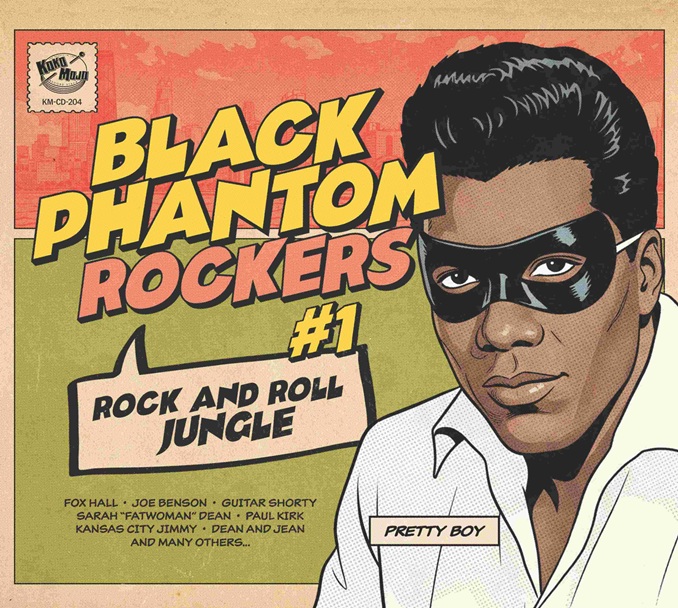
PHANTOM ROCKERS # 1: ROCK AND ROLL JUNGLE
Kruisbestuiving bij Rhythm Bomb Records: na de Koko Mojo reeksen Black Boss Rockers, More Black Boss Rockers en Boss Black Instrumentals en Atomicat's Phantom Rockers reeks lanceert Koko Mojo nu minstens vier Black Phantom Rockers. Het principe is hetzelfde als de Phantom Rockers reeks: artiesten die om wat voor reden dan ook singles uitbrachten onder andere namen of al dan niet anoniem meespeelden op andermans platen, maar dan specifiek toegespitst op het zwarte rock 'n' roll segment. Helaas staan er in tegenstelling tot Atomicat's Phantom Rockers géén hoesnota’s in de openklapbare digipack, dus het is voor mij puur giswerk wie zich verschuilen achter de namen op de tracklisting. Toevallig weet ik dat Bob & Earl (jive rocker You Made A Boo Boo) voor de helft dezelfde Bob & Earl zijn van de soul klassieker Harlem Shuffle uit 1963. Voor de helft: Earl Nelson was dezelfde, de Bob (Bobby Day op You Made A Boo Boo) was een andere Bob. De ene Bob is dus de andere niet, maar Big Bob (het strollende What Am I) was Bob Kornegay, terwijl Pretty Boy (de screamers Bip Bop Bip en Rockin' The Mule) de toekomstige soulzanger Don Covay was. Voor de rest heb ik geen flauw idee wie of wat bijvoorbeeld Fox Hall (My Baby Left Me) of Paul Kirk (Ready Little Steady) waren. Of is er totaal geen info te vinden over hen en zijn het echte fantomen? Met andere woorden: je weet het of je weet het niet, want deze CD zal het u niet leren. Wat rest zijn 26 tracks met veel wild in het rond toeterende saxofoons, knetterende gitaren, zwarte schreeuwlelijkaards (Kansas City Jimmy met Cheating Woman, Billy La Mont met het allesbehalve country Country Boy, The Table Toppers met het hi ho silver Talk To Me Baby) en vooral heel veel vrolijke rock 'n' roll van onbekenden als Joe Benson (Rock 'n' Roll Jungle, pas nog in België gecoverd door Ring-Dang-Dilly), Dimple Jackson (Ring A Ling), Joe Gaines (Voo Doo Lou), Wilbur Whitfield (PB Baby), Willie King (Peg Leg Woman) en Dean & Jean (Oh Yeah dat in zich de kiem draagt van het beste van de op stapel staande soul). Daarnaast bevat Black Phantom Rockers # 1 een blokje rechtdoor bluesrock met mondharmonica (Lonesome Sundown's Gonna Stick To You Baby, Clifford King's Want To Jump With You Baby, Elmon Mickle's instrumentale Lonesome Highway) en kleine zijsprongetjes naar de iets ouder klinkende jump swing van Sarah Dean (I Got Your Boogie) en Guitar Shorty's iets jongere medium tempo soulblues Ways Of A Man. Info: www.vintagerockinroots.com (Frantic Franky) Cross-fertilization at Rhythm Bomb Records: after Koko Mojo’s Black Boss Rockers, More Black Boss Rockers and Boss Black Instrumentals series and Atomicat’s Phantom Rockers series, Koko Mojo now presents at least four Black Phantom Rockers CDs. The concept is the same as the Phantom Rockers series: artists who for whatever reason released 45s under different names or more or less anonymously played on other people’s records, but this time around with a specific focus on the black rock ’n’ roll segment. Unfortunately unlike Atomicat’s Phantom Rockers CDs there are no liner notes in the fold-out digipack, so for me it’s pure guesswork as to who's hiding behind the names on the tracklist. I do happen to know that Bob & Earl (the jive rocker You Made A Boo Boo) are partly the same Bob & Earl from the 1963 soul classic Harlem Shuffle. Partly, as Earl Nelson was the same guy, while Bob (Bobby Day on You Made A Boo Boo) was a different Bob. So one Bob isn’t the other Bob, but Big Bob (the strolling What Am I) was Bob Kornegay, while Pretty Boy (the screamers Bip Bop Bip and Rockin’ The Mule) was future soul singer Don Covay. As for the rest of 'em I haven’t the faintest idea who or what were for example Fox Hall (My Baby Left Me) or Paul Kirk (Ready Little Steady). Or is it that there's absolutely no information to be found which makes them real phantoms? In other words: either you know or you don’t know, because this CD isn't gonna tell you. What remains are 26 tracks featuring wild blaring saxophones, clucking guitars, black screamers (Kansas City Jimmy's Cheating Woman, Billy La Mont's anything but country Country Boy, The Table Toppers' hi ho silver Talk To Me Baby), and most of all plenty of upbeat rock ’n’ roll from unknowns like Joe Benson (Rock ‘n’ Roll Jungle, recently covered in Belgium by Ring-Dang-Dilly), Dimple Jackson (Ring A Ling), Joe Gaines (Voo Doo Lou), Wilbur Whitfield (PB Baby), Willie King (Peg Leg Woman) and Dean & Jean (Oh Yeah which carries the seeds of the best of the upcoming soul music). On top of that Black Phantom Rockers # 1 features some straightforward blues rock with harmonica (Lonesome Sundown’s Gonna Stick To You Baby, Clifford King’s Want To Jump With You Baby, Elmon Mickle’s instrumental Lonesome Highway) and brief detours into the slightly older sounding jump swing of Sarah Dean's I Got Your Boogie and Guitar Shorty’s slightly younger medium tempo soul blues Ways Of A Man. Info: www.vintagerockinroots.com (Frantic Franky) |
17 juni 2026
Vinyl Recensie
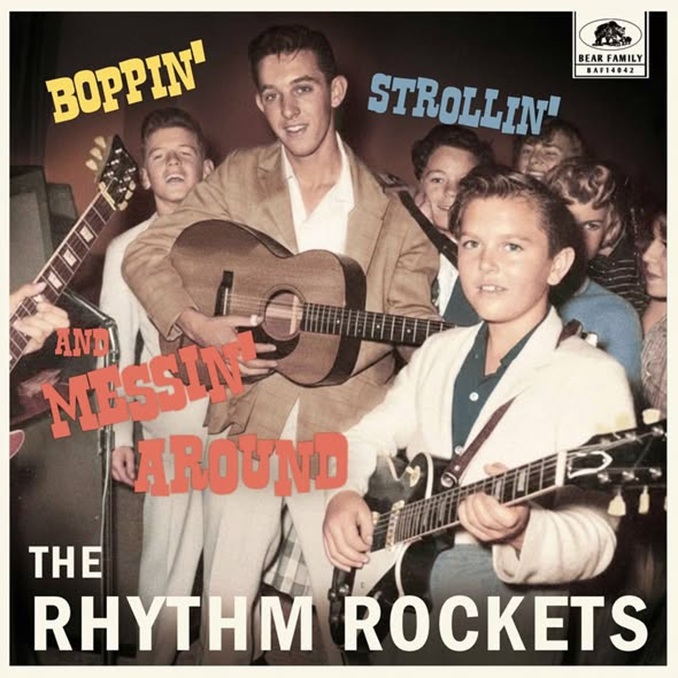
BOPPIN'
STROLLIN' AND MESSIN' AROUND/ THE RHYTHM ROCKETS
Ik
ken van The Rhythm Rockets enkel het nummer The Slide, en dat ken
ik alleen maar omdat het eind jaren '90 werd gecoverd door Wildfire
Willie & the Ramblers. The Rhythm Rockets brachten bij leven en
welzijn slechts één single uit, Lucky Day / My Shadow
in 1958, dus daar stond The Slide geeneens op. Alle andere singles
van hen zijn recente repro’s dan wel bootlegs, afkomstig van
nummers die begin jaren '80 op verzamel LP’s stonden (met name
de Miami Rockabilly reeks op het Amerikaanse label AFS Records) en
later op de gelijknamige Ace CD en op een Buffalo Bop CD. Bear Family
(D) brengt alles nu netjes bijeen op één 10 inch met
elf zelfgeschreven nummers, en dat zouden de complete opnames moeten
zijn van een groep uit Florida rond de broers Donnie & Ray Pate,
destijds tieners, 17 en 14 jaar ten tijde van de opnames, zo lees
ik. Volker Houghton, de Brit als geen ander gespecialiseerd in het
opsporen van verloren gewaande fifties artiesten of in vele gevallen
hun nog levende familie en nazaten vond Donnie's zoon en dochter én
de dochter van de drummer van The Rhythm Rockets, en het resultaat
van zes jaar vertrouwen winnen en correspondentie ligt nu op uw tafel:
een folder van twaalf pagina’s op 21 x 21 centimeter met het
verhaal van The Rhythm Rockers van naaldje tot draadje in een vlot
verhaal gegoten door Bill Dahl, verluchtigd met familiefoto’s,
en muziek op uw platenspeler die u gegarandeerd van uw sokken blaast
als u houdt van rauwe, pure rock 'n' roll die een beetje brutaal mag
zijn in een geluidskwaliteit à la White Label LP’s: ook
al is dit opgenomen met gitaren, bas, piano en drums klinkt het als
één chaos, en zo hoort het. My Shadow, Here There And
Everywhere en I've Got That Feeling zijn gedreven gitaarrockers, Lucky
Day is pittig, bijna pikant, en Donny's Boogie is zoals de titel belooft
een gitaar/piano instro, rechtdoor en whiter dan white rock. Het melodieuze
Boppin' Strollin' And Messin' Around klinkt door zijn merkwaardige
akkoordenschema recenter: misschien jaren '60 of '70, maar wat het
ook is, 't is 100 % rock 'n' roll. Het enige kalmere nummer, Everybody's
Gonna Do The Rock 'n' Roll, is dan weer tijdloos klinkende rockabilly.
Niettemin lees ik in de hoesnota’s dat alle nummers wel degelijk
zouden zijn opgenomen in 1958. My Love Is Gone klinkt als een stop-start
improvisatie, en we hebben daarnaast recht op wat klinkt als een demo
van My Shadow en een tweede Donny's Boogie. Beter dan dit wordt het
niet. The
only Rhythm Rockets song I know is The Slide, and I only know it because
Wildfire Willie & the Ramblers covered it in the late nineties.
The Rhythm Rockets released only one 45 in their entire career, 1958's
Lucky Day / My Shadow, which means The Slide wasn’t even on
it. All their other 45s are recent repros or bootlegs sourced from
tracks that appeared on compilation LPs in the early eighties (notably
the Miami Rockabilly series on the American label AFS Records) and
later on the eponymous Ace CD and on a Buffalo Bop CD. Bear Family
(D) has now neatly compiled everything onto one 10 inch record featuring
eleven selfwritten songs, supposedly the complete recordings of a
Florida based band centered around brothers Donnie & Ray Pate
who were teenagers at the time — I read they were 17 and 14
at the time of the recordings. Volker Houghton (GB), specialized like
no one else in tracking down lost artists from the fifties, or in
many cases their surviving family members and descendants, found Donnie’s
son and daughter as well as the daughter of The Rhythm Rockets’
drummer, and the result of six years of correspondence and building
friendships is a 12 page booklet measuring 21 x 21 centimeters presenting
the Rhythm Rockers' story from start to finish as told by Bill Dahl
and illustrated with pictures from the family photo album, and music
on your turntable guaranteed to blow you away if you're into raw,
unadulterated rock ‘n’ roll a little rough around the
edges with a sound quality reminiscent of White Label LPs: even though
this was recorded with guitars, bass, piano and drums it sounds like
one big chaotic mess, just the way I like it. My Shadow, Here There
And Everywhere and I’ve Got That Feeling are driving guitar
rockers, Lucky Day is spicy, almost sultry, and Donny’s Boogie
is as its title suggests a guitar/piano instrumental, straightforward
and whiter than white rock. The melodic Boppin’ Strollin’
And Messin’ Around sounds more contemporary due to its unusual
chord progression: this could be sixties or seventies, but whatever
it is it’s 100 % rock ’n’ roll, while the only calmer
track, Everybody’s Gonna Do The Rock ’n’ Roll, is
timeless sounding rockabilly. Nevertheless the liner notes assume
that all the tracks were indeed recorded in 1958. My Love Is Gone
sounds like a stop-start improvisation, and we’re also treated
to what sounds like a demo of My Shadow and a second version of Donny’s
Boogie. It simply doesn’t get any better than this. |
CD Recensie
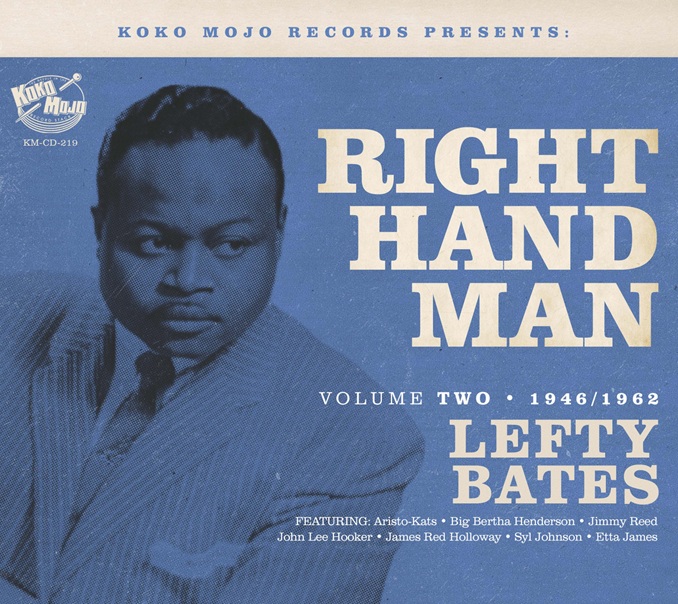
RIGHT
HAND MAN VOLUME TWO - 1946/1962/ LEFTY BATES
Net als de andere tweedelige CD’s in de Right Hand Man reeks
gewijd aan studiomuzikanten die hand- en spandiensten verleenden aan
andere artiesten pikt deel 2 van Chicago bluesgitarist Lefty Bates
niet de draad op waar deel 1 eindigde maar wordt terug het verleden
ingedoken, meer bepaald naar 1946 en 1947 met drie nummers van zijn
toenmalige groep The Aristo-Kats waarvan It Makes Me Blue, gekraak
incluis, zo in een Humhrey Bogart film à la Casablanca had
gekund: een lege kroeg in zwart-wit, een verlopen Bogie aan de bar,
een eenzame trompet en een zwarte pianist aan de piano. Ain't The
Gravy Good is wat sneller en leuker, een humoristisch verhaaltje vol
woordspelingen over voedsel. De piano is hier vrolijk, de trompet
dixieland jazzy, en The Spider And The Fly gaat de boogie toer op
met een voor 1946 flink swingende solo en voor het eerst hier ook
een deftige gitaarsolo van Lefty Bates. Op CD 1 stonden twee andere
Aristo-Kats nummers want betekent dat beide CD’s samen vijf
van de acht bestaande Aristo-Kats opnames bevatten, naar ik mag verhopen
de beste.
Just
like the other double CD sets in the Right Hand Man series dedicated
to studio musicians who lent a helping hand to other artists, Part
2 of chicago blues guitarist Lefty Bates does not pick up where Part
1 left off but delves back into the past, specifically to 1946 and
1947, with three tracks from The Aristo-Kats, his band at the time.
Among them It Makes Me Blue, complete with its crackles and pops,
could have easily fit in a Humphrey Bogart film like Casablanca: an
empty bar in black and white, an unshaven Bogie smoking a cigarette
in front of a glass of whiskey, a lone trumpet, and a black pianist
tickling the ivories. Ain’t The Gravy Good is a bit faster and
more fun, a humorous little tale full of puns about food. Here the
piano is cheerful and the trumpet dixieland jazzy, while The Spider
And The Fly goes boogie woogie with a rather swinging solo for 1946
and for the first time here a fine guitar solo by Lefty Bates. CD
1 featured two other Aristo-Kats tracks, which means that both CDs
combined contain five of the eight existing Aristo-Kats recordings,
hopefully the best ones. |
10 juni 2026
Vinyl Recensie
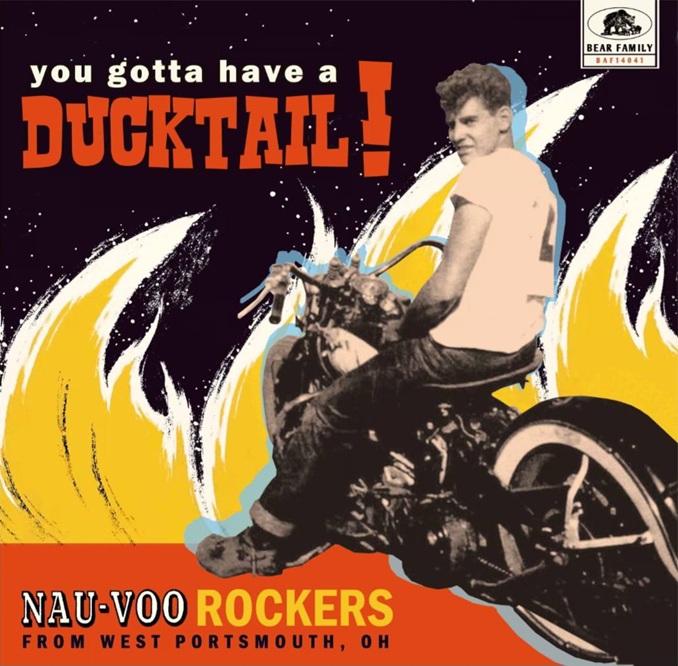
YOU GOTTA HAVE A DUCKTAIL
Na
albums gewijd aan Oak Records, Blue Moon en Bella Records, San Records,
Stars Inc en Colonial Records brengt het Duitse re-issue label Bear
Family nu een zesde 10 inch uit die focust op de rock 'n' roll output
van één bepaald label, een superhandige insteek voor
kleine labels waarvan de rock 'n' roll output te klein was om een
That'll Flat Git It CD vol te krijgen, zij het dat Colonial bijvoorbeeld
al wél een full CD kreeg. Ook de hoezen van deze albums doen
denken aan de That'll Flat Git It reeks. Bovendien verschijnt de muziek
zo terug op het medium waarvoor ze gemaakt werd, namelijk vinyl. Dit
keer is Nau-Voo Records uit West Portsmouth, Ohio aan de beurt, het
label waarop tussen 1958 en 1960 welgeteld negen singles + één
op Nau-Voo voorloper MRC (Mack Recording Company) verschenen in een
stad die niet bepaald bekend staat als de geboorteplaats van de rock
'n' roll. Van die tien singles uitgebracht vòòr het
overlijden van Nau-Voo baas Glen "Mack" McKinney in 1962
op 47-jarige leeftijd staan op deze plaat een dozijn nummers waarvan
u en ik er wellicht een aantal hebben op compilaties allerhande, maar
om ze allemaal samen te hebben is zuivere luxe, want de kwaliteit
en het rock 'n' roll gehalte zijn hoog.
Following albums dedicated to Oak Records, Blue Moon and Bella Records,
San Records, Stars Inc. and Colonial Records, German re-issue label
Bear Family now releases their sixth 10 inch focusing on the rock
‘n’ roll output of one single label, a great approach
for small labels whose rock ‘n’ roll catalog was too limited
to fill an entire That'll Flat Git It CD, even though for example
Colonial already had its own full Flat Git It CD. The front covers
of these albums also evoke the That'll Flat Git It series. Moreover
this way the music is now available again on the medium for which
it was originally created, vinyl. This time it’s the turn of
Nau-Voo Records from West Portsmouth, Ohio, a label which between
1958 and 1960 released exactly nine 45s plus one on Nau-Voo’s
predecessor MRC (Mack Recording Company) in a city not exactly known
as the birthplace of rock ’n’ roll. Of those ten 45s that
appeared before Nau-Voo boss Glen “Mack” McKinney passed
away in 1962 at the age of 47, this 10 inch features a dozen sides,
some of which you and I may have on other compilations, but having
them all together in one bash is pure luxury, for the quality and
the rock ‘n’ roll content are first rate. |
CD Recensies
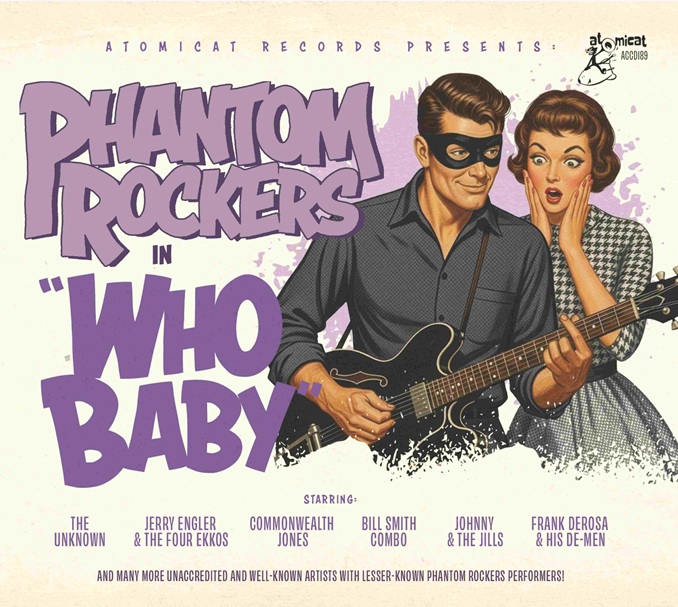
PHANTOM
ROCKERS: WHO BABY
Nummer
vier in de rock 'n' roll reeks met artiesten onder schuilnamen of
anoniem als begeleiders van anderen staat weer boordevol met 30 tracks
1954-1963. Bekende namen die niet mee op het label stonden zijn Eddie
Cochran (gitaar op Skeets McDonald's bekende rockabilly orkaan You
Oughta See Grandma Rock en John Ashley's onbekende stop-start stroll
Born To Rock), Buddy Holly (gitaar op Swingin' Daddy van Buddy Knox
& the Rhythm Orchids - Knox vuurt de solo’s aan met de uitroep
"rave on") en samen met de twee andere Crickets als backing
band op Jack Huddle's boppende Starlight), en Ronnie Dawson als drummer
van The Creeps op de Halloween instrumental The Whip, en als drummer
én zanger van Johnny & the Jills' Pauline, een teen rocker
met violen die klinkt als Helen Shapiro. De CD bevat tevens zijn fascinerende
Who's Been Here dat verscheen onder Dawson's blues pseudoniem Commonwealth
Jones. Andere aliassen zijn de toekomstige PJ Proby als Jett Powers,
een naam even branievol als zijn nummer Go Girl Go hier, en componiste
Jackie DeShannon als Jackie Dee met een beetje folky meezingversie
van I'll Be True dat u misschien kent van Bill Haley, of van Faye
Adams die het als eerste deed of van Tommy Ridgley die het ook coverde.
Number
four in the rock ‘n’ roll series featuring artists performing
under pseudonyms or anonymously backing other musicians is once again
packed with 30 tracks from 1954 to 1963. Well known names omitted
from the labels include Eddie Cochran (guitar on Skeets McDonald’s
famous rockabilly storm You Oughta See Grandma Rock and John Ashley’s
obscure stop-start stroll Born To Rock), Buddy Holly (guitar on Buddy
Knox & the Rhythm Orchids' Swingin' Daddy — Knox kicks off
the solos with the exclamation “rave on”) and alongside
the other two Crickets as backing band for Jack Huddle’s boppin'
Starlight, and Ronnie Dawson as drummer for The Creeps on the halloween
instrumental The Whip and as drummer and singer on Johnny & the
Jills’ Pauline, a teen rocker with strings that sounds like
Helen Shapiro. The CD also includes his fascinating Who's Been Here,
released under Dawson's blues pseudonym Commonwealth Jones. Other
aliases include the future PJ Proby as Jett Powers, a name as swaggering
as his song Go Girl Go here, and composer Jackie DeShannon posing
as Jackie Dee with a slightly folky sing-along version of I’ll
Be True which you may know from Bill Haley, from Faye Adams who was
the first to record it, or from Tommy Ridgley who also covered it.
|
3 juni 2026
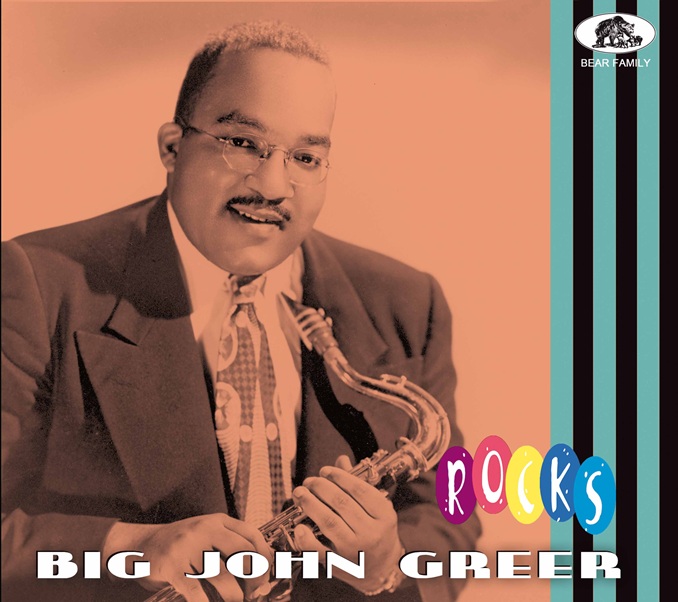
ROCKS/
BIG JOHN GREER
De grootste - enige? - hit van tenorsaxofonist Big John Greer, van
1949 tot 1950 de vervanger van zanger-saxofonist Bull Moose Jackson
in de band van Lucky Millinder en toeterend op plaatjes van Bull Moose
Jackson (Nosey Joe) en Wynonie Harris (Bloodshot Eyes, Mr. Blues Is
Coming To Town, Oh Babe), was de ballade Got You On My Mind uit 1951,
goed voor covers door onder meer Jerry Lee Lewis, Big Joe Turner en
Brook Benton. Got You On My Mind staat als laatste en als enige echt
trage nummer op deze CD die focust op zijn rockender werk. Bear Family
bracht in 1992 de triple CD Rockin' With Big John met 72 tracks uit,
en sindsdien verschenen op andere labels nog een paar Big John Greer
CD’s die volgens mij gewoon samengevat waren uit die Bear box
want ze voegden niks toe terwijl die triple CD geeneens exhaustief
was. De muziek is zwarte swing en jive rock 'n' roll opgenomen met
een uitgebreide bandbezetting met veel blazers vaak inclusief trombone,
baritonsax en trompet, soms ook met piano, deels begeleid door het
orkest van Lucky Millinder, deels met studiomuzikanten waaronder zwaargewichten
als Bill Doggett (piano), Rene Hall en Mickey Baker (gitaar), Panama
Francis (drums), en alsof Greer alleen al niet voldoende was nog andere
saxofonisten als Big Al Sears en Sam The Man Taylor. Muzikaal zit
alles dan ook meer dan snor, en Greer beschikte over een warme, gevoelige
hoge zangstem die moeiteloos van een grover kantje kon worden voorzien
indien vereist. De CD met 30 nummers 1948-1960 omvat rhythm 'n' blues
swing, bevat het niet onbekende Bottle It Up And Go, Greer's goeie
versies van Drinkin' Wine Spo Dee O Dee en You Played On My Piano,
zijn Maybelline antwoord/kopie Come Back Maybelline, instrumentale
big band honkers (Big John's A Blowin' en Big Rock, dat laatste een
nieuwe versie van een oudere opname van hem getiteld Rockin' With
Big John uit 1948 op Sittin' In With Records die ik nog nooit heb
gehoord), strolls (Soon Soon Soon), vrolijke rockers als Blam, Greer's
wildere en rauwere werk als I'm The Fat Man, Ride Pretty Baby, I'll
Never Let You Go en Clambake Boogie, beschaafde doch onweerstaanbaar
rockende jivers als Lucky Lucky Me, Long Tall Gal en het door dixieland
swing beïnvloede If I Told You Once, alsmede gelijkaardige doch
rustiger nummers als Red Juice, Woman (Is A Five Letter Word), Have
Another Drink And Talk To Me en Strong Red Whiskey. Veel drinkliederen,
zoveel is duidelijk, en naarmate de jaren voortschrijden horen we
meer rock 'n' roll gitaren. Interessant hierbij is dat er zes nummers
tussen staan die niét op die triple CD stonden noch op enige
andere mij bekende Big John Greer CD, met als prijsbeest de stop-starter
Come Back Uncle John, qua tekst een antwoord op Long Tall Sally van
Little Richard, zij het dat de muziek bijna zwarte rockabilly is.
De andere vijf zijn de instrumentale gitaar-orgel-saxers Record Hop,
Midnight Ramble en Duck Walk, de ritmische rocker Honey Why uit 1960
waarvan niet zeker is of het wel degelijk ònze Big John Greer
is omdat de single vier jaar na zijn laatst gekende opnamesessie verscheen
aan de andere kant van het land, en de gladde vocale crooner Wineola,
in 1948 Greer's allereerste opname die wat mij betreft net als de
jazzy blues of bluesy jazz instrumental Night Crawlin', de medium
tempo big band swing van Red Juice, I Want Ya I Need Ya of Rocking
Jenny Jones ondanks dat woordje "rock" in de titel hier
hadden mogen vervangen worden door bijvoorbeeld het toch rockender
Drinkin' Fool, A Man And A Woman, Can't Stand It Any Longer of het
van rock 'n' roll piano voorziene Play Me Some Loud Music. Maar goed,
dat is een persoonlijke appreciatie die niets te maken heeft met de
kwaliteit van de muziek op zich.
The biggest - only? - hit of tenor saxophonist Big John Greer who
from 1949 to 1950 replaced singer-saxophonist Bull Moose Jackson in
Lucky Millinder’s band and played on records from Bull Moose
Jackson (Nosey Joe) and Wynonie Harris (Bloodshot Eyes, Mr. Blues
Is Coming To Town, Oh Babe) was the 1951 ballad Got You On My Mind,
covered by several other artists including Jerry Lee Lewis, Big Joe
Turner and Brook Benton. Got You On My Mind is the last and only real
slow song on this CD which focuses on Greer's rockin’ recordings.
Bear Family released the 72 track triple CD Rockin’ With Big
John way back in 1992, and since then a couple more Big John Greer
CD's appeared on other labels which in my opinion were simply summaries
from that Bear set because they added nothing new, even though that
triple CD wasn’t even exhaustive. The music is black swing and
jive rock ‘n’ roll recorded with a large band line-up
featuring lots of brass often including trombone, baritone and trumpet,
sometimes with piano as well, in part accompanied by Lucky Millinder’s
orchestra and in part by studio heavyweights like Bill Doggett (piano),
Rene Hall and Mickey Baker (guitar), Panama Francis (drums), and as
if Greer alone weren’t enough other saxophonists like Big Al
Sears and Sam The Man Taylor. Musically speaking everything is first
rate, and Greer possessed a warm, sensitive high singing voice that
could effortlessly take on a rougher edge when required. The 30 track
CD (1948–1960) features rhythm ‘n’ blues swing,
including well known songs such as Bottle It Up And Go, Greer's fine
renditions of Drinkin' Wine Spo Dee O Dee and You Played On My Piano,
the Maybelline answer cover Come Back Maybelline, instrumental big
band honkers (Big John’s A Blowin’ and Big Rock, a new
version of an older 1948 recording of his on Sittin’ In With
Records titled Rockin’ With Big John which I have never heard,
strollers (Soon Soon Soon), upbeat rockers like Blam, Greer’s
wilder and rawer work like I’m The Fat Man, Ride Pretty Baby,
I'll Never Let You Go and Clambake Boogie, civilized yet irresistibly
rockin' jivers like Lucky Lucky Me, Long Tall Gal and the dixieland
swing influenced If I Told You Once, as well as similar yet calmer
songs like Red Juice, Woman (Is A Five Letter Word), Have Another
Drink And Talk To Me and Strong Red Whiskey. Many drinking songs,
that much is clear, and as the years go by we hear more rock ‘n’
roll guitars. What’s interesting here is the six tracks that
were not on that triple CD nor in fact on any other Big John Greer
CD I’m aware of, the standout being the stop-starter Come Back
Uncle John, lyrically an answer to Little Richard’s Long Tall
Sally, even though the music is almost black rockabilly. The other
five are the instrumental guitar-organ-sax numbers Record Hop, Midnight
Ramble and Duck Walk, the rhythmic 1960 rocker Honey Why (although
it’s not certain whether this is really our Big John Greer since
the 45 was released on the other side of the country four years after
his last known recording session), and the smooth vocal crooner Wineola,
Greer’s very first recording from 1948, which in my opinion,
just like the jazzy blues or bluesy jazz instrumental Night Crawlin,
the medium tempo big band swing of Red Juice, I Want Ya I Need Ya
or Rocking Jenny Jones — despite that little word “rock”
in the title — could have been replaced here by for example
the far more rockin' Drinkin’ Fool, A Man And A Woman, Can't
Stand It Any Longer or the rock ‘n’ roll piano driven
Play Me Some Loud Music. This is however a personal preference that
has nothing to do with the quality of the music itself. |
RIGHT
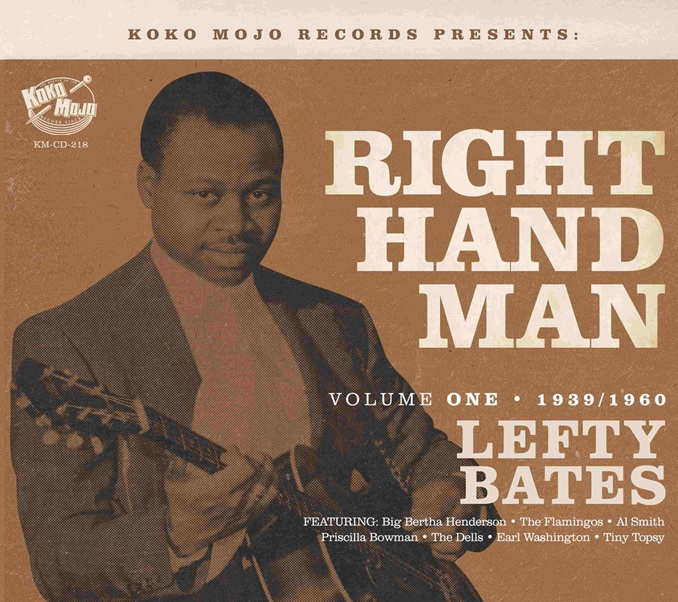
HAND MAN VOLUME ONE - 1939/1960/ LEFTY BATES
Na telkens twee CD’s gewijd aan gitaristen Lafayette Thomas,
Chuck Norris en Robert Lockwood Jr is het nu de beurt aan Chicago
blues gitarist Lefty Bates, iemand van wie ik, dat geef ik grif toe,
nog nooit gehoord had. De 28 tracks 1939-1960 die dus meer dan twintig
jaar muziekgeschiedenis omspannen doen me evenmin een belletje rinkelen.
Da's dan ook de insteek van de Right Hand Man reeks: de aandacht vestigen
op studiomuzikanten die hand- en spandiensten verleenden aan andere
artiesten, zelfs als ze zoals Lefty Bates (waarschuwing: flauwe mop
op komst ) linkshandig waren, hahaha. Een eigen aparte gitaarstijl
kan ik niet herkennen in de nummers (op sommige tracks speelt ie trouwens
alleen ritmegitaar), maar misschien waren veelzijdigheid en aanpassingsvermogen
juist basisvereisten om het te maken als studiomuzikant, in Bates'
geval onder meer als lid van de huisband van Vee-Jay Records en als
ritmegitarist voor bluesmensen als Jimmy Reed en Buddy Guy. De bekendste
nummers waarop hij speelt, (Crazy Little Mama) At My Front Door van
The El Dorados en Baby What You Want Me To Do en Big Boss Man van
Jimmy Reed, staan niet op deze CD die min of meer chronologisch loopt
en dus opent in 1939 met één nummer van Tommy Powell
& his Hi De Ho Boys, de band waarin Bates speelde toen hij zijn
opnamedebuut maakte. That Cat Is High, cover van een Ink Spots song,
is vrolijke akoestische vocal harmony swing met Django Reinhardt gitaar,
contrabas en scatzang. Let ook even op de tekst die wel degelijk handelt
over stoned zijn. Van 1939 maken we na Bates' dienstplicht een sprongetje
naar 1946 en twee al even vooroorlogs klinkende opnames van Bates'
toenmalige groep The Aristo-Kats, de rustige piano stop blues Watch
Yourself Baby met jazzy akkoorden en schetterende trompet en de meer
uptempo instrumentale piano Boogie In C met opnieuw die schetter trompet,
opnieuw een jazzy vibe én een solo op contrabas. Na opnieuw
in de tijdmachine van HG Wells te stappen zijn we na drie nummers
al in de jaren '50, meer bepaald in 1953 met Big Bertha Henderson's
Rock Daddy Rock, ondanks de titel jazzy rhythm 'n' blues swing. The
Flamingos zouden een hele bekende doo-wop groep worden maar in You
Ain't Ready uit 1953 hoor je dat hun muziek uit de big band boogie
swing kwam, muziek die evolueerde tot die opgewekte pure doo-wop (Bang
Goes My Heart van The Moroccos), vaak vermengd met exotische invloeden
zoals bij The El Dorados (Rock'n' Roll's For Me), The Danderliers
(Chop Chop Boom) en The Dells (A Distant Love), of met duistere popcorn
zoals in het uptempo I Really Love You van Ben Imon. Sugar Daddy van
Priscilla Bowman is helemáál popcorn noir, en ook Tiny
Topsy (Just A Little Bit met Tequila akkoorden) en Piney Brown (Sugar
In My Tea) vallen daaronder. U hoort liever rock 'n' roll als doo-wop?
Rock 'n' Roll Mama van Camille Howard, om u te dienen. U hoort liever
surf? In dat geval kent u ongetwijfeld Misirlou, maar zoals iedereen
ondertussen zou moeten weten was dat oorspronkelijk geen surf maar
exotica, bijvoorbeeld in de versie van Earl Washington, een erg geslaagde
medium tempo versie want ze bevat naast een esoterische vrouwenstem
als hoofdinstrument een piano die het ruisen van een harp imiteert
en veel slurpsaxofoon. Ook de rustige instrumental The Elder van Johnny
Pate wordt door wat klinkt als een dwarsfluit vrij exotisch, en die
exotica wordt doorgetrokken tot het jungle exotica easy tune E N A
van Horace M. Palm.
After
two CD's each dedicated to guitarists Lafayette Thomas, Chuck Norris
and Robert Lockwood Jr, the spotlight now shines on Chicago blues
guitarist Lefty Bates, someone I admit I never heard of before. The
28 tracks from 1939–1960, spanning more than twenty years of
music history, don’t ring any bells either. That is of course
the aim of the Right Hand Man series: to draw attention to studio
musicians who lent a helping hand to other artists, even if like Lefty
Bates (spoiler alert: bad joke a-coming) they were left handed, hahaha.
I can’t discern a distinct guitar style of his own in these
songs (on some tracks he plays only rhythm guitar, by the way), but
perhaps versatility and adaptability were precisely the basic requirements
for making it as a studio musician — in Bates’ case notably
as a member of the house band at Vee-Jay Records and as rhythm guitarist
for blues artists like Jimmy Reed and Buddy Guy. The best known songs
on which he played, The El Dorados' (Crazy Little Mama) At My Front
Door and Jimmy Reed's Baby What You Want Me To Do and Big Boss Man,
are not included on this CD, arranged more or less chronologically
and therefor starting in 1939 with a single track by Tommy Powell
& his Hi De Ho Boys, the band in which Bates played when he made
his recording debut. That Cat Is High, cover of an Ink Spots song,
is cheerful acoustic vocal harmony swing featuring Django Reinhardt
style guitar, double bass and scat singing. Please do note the lyrics
which are indeed about being stoned. From 1939 and Bates’ military
service we jump forward to 1946 and two recordings by Bates’
band at the time, The Aristo-Kats, that sound just as pré-war:
the laid back piano stop blues Watch Yourself Baby with jazzy chords
and a blaring trumpet, and the more uptempo instrumental piano piece
Boogie In C featuring the same blaring trumpet, again a jazzy vibe,
and a double bass solo. After stepping back into HG Wells' time machine
we find ourselves after three songs already in the 1950s, more specifically
in 1953 with Big Bertha Henderson’s Rock Daddy Rock, despite
its title jazzy rhythm ’n’ blues swing. The Flamingos
would go on to become a very famous doo-wop group but in 1953's You
Ain’t Ready you can hear that their music was based on big band
boogie swing, music that evolved into that cheerful real doo-wop (Bang
Goes My Heart by The Moroccos), often incorporating exotic influences
as in The El Dorados’ Rock’n’ Roll’s For Me,
The Danderliers' Chop Chop Boom and The Dells' A Distant Love, or
dark popcorn like Ben Imon’s uptempo I Really Love You. Priscilla
Bowman’s Sugar Daddy is pure popcorn noir, and Tiny Topsy (Just
A Little Bit with tequila chords) and Piney Brown (Sugar In My Tea)
also fall into that category. Do you prefer rock ‘n’ roll
over doo-wop? Here's Camille Howard, at your service with Rock ‘n’
Roll Mama. You prefer surf? If that's the case you’re undoubtedly
familiar with Misirlou, but as everyone should know by now originally
Misirlou wasn't surf but exotica, as heard for example in Earl Washington’s
version, an excellent medium tempo rendition that features not only
an esoteric female voice but as the lead instrument a piano that imitates
the rustling of a harp with plenty of slurpy saxophone. Johnny Pate’s
calm instrumental The Elder sounds quite exotic due to what sounds
like a flute, and that exotic feeling carries over into Horace M.
Palm’s jungle exotica easy tune E N A. |
26 mei 2026
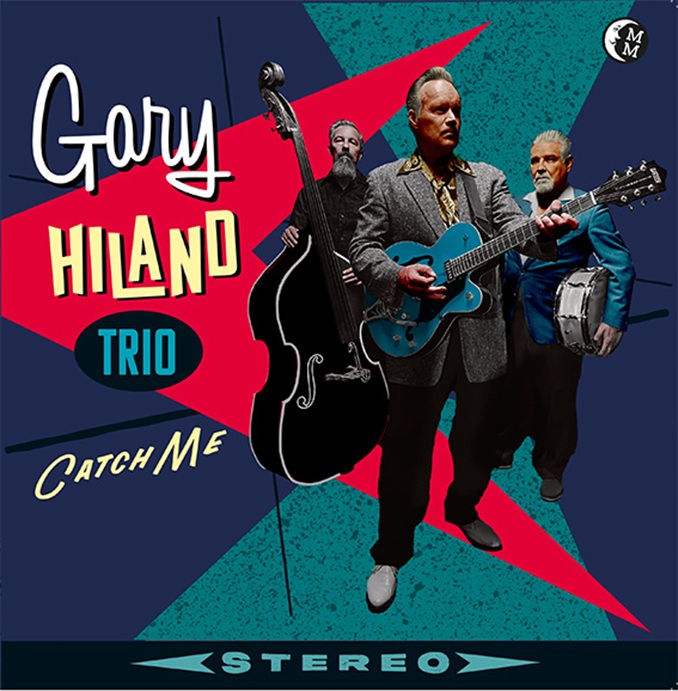
CATCH
ME/ GARY HILAND TRIO
Full album debuut van dit trio opgericht in 2018 in Helsinki dat eerder in eigen beheer een 4 track mini CD (Wax-O, 2020) en op Goofin' Records de GRSI 247 vinyl single Running Around / Rock And Roll Blues (2024) uitbracht. De muziek daarop was moderne, vrij krachtige rockabilly met een bite, zij het nog steeds verankerd in traditionele rockabilly. Deze CD gaat nog net ietsje verder, maar is voor alle duidelijk géén psychobilly, punkabilly of metal met een contrabas. Nee, voor mij is dit neo, gekenmerkt door het voor dat subgenre zo kenmerkende nerveuze en springerige zoals te horen in titeltrack Catch Me, zij het in tracks als Tomorrow, Keep Movin' On en I Don't Mind gecombineerd met meer melodieuze rock en pop. Ik hoor echo’s van de stem en de gitaar van Brian Setzer (Rock On) en bij uitbreiding van The Stray Cats: de gitaar in Easy And Free ademt Rock This Town, net zoals de riff van Devil In High-Heels dicht in de buurt van Tainted Love komt en in Gipsy Woman de akkoorden van Tequila zitten. Toch zijn dat eigen nummers want alle twaalf songs zijn van de hand van zanger-gitarist Kari Kunnas alias Gary Hiland die u zou moeten kennen als gitarist van Hi-Fly Rangers, Daryl Haywood Combo en Maibell & the Misfires. Voor wie goed is in namen: drummer Tommy Dahlström zit/zat (als gitarist) ook in The Rhythm Hogs, B. Cupp Combo en Toreadors (Trio), contrabassist Janne Anttonen in Hi-Speed Rockets, The Housewreckers en surfgroep Husky & the Sandmen. Eén uitzondering op die eigen nummers: Make With The Lovin' van Dennis Herrold dat hier uiteraard wat pittiger en misschien wat dreigender klinkt. Er zitten in dit album ook nog andere dingen in: Dirty Stroll is een uptempo instro stroll met rhythm 'n' blues geïnspireerde gitaar, en Shame is een ouderwetse trage. Niets nieuws onder de zon dus, maar foutloos uitgevoerd met stijl en klasse. Ook uit op LP! Info: www.garyhilandtrio.com en www.moondogmusic.fi (Frantic Franky) This is the full length debut album from the trio formed in Helsinki in 2018 who already released a self published 4 track mini CD (Wax-O, 2020) and the Goofin' GRSI 247 vinyl 45 Running Around / Rock And Roll Blues. The music on those was modern rather powerful billy with a bite, though still firmly rooted in classic rockabilly. This CD takes things a little bit further, but let me make it clear that it's not psychobilly, punkabilly or metal with a double bass. No, I call it neo, characterized by the nervous and jumping energy so typical of that subgenre, as heard in the title track Catch Me, yet combined with more melodic rock and pop in tracks like Tomorrow, Keep Movin’ On and I Don’t Mind. I hear echoes of Brian Setzer’s voice and guitar (Rock On), and by extension of The Stray Cats: the guitar in Easy And Free evokes Rock This Town, just like the Devil In High-Heels riff is reminiscent of Tainted Love and Gipsy Woman features some chords from Tequila. Nevertheless these are their own songs, as all twelve tracks were written by singer-guitarist Kari Kunnas aka Gary Hiland whom you should know as the guitar player from The Hi-Fly Rangers, Daryl Haywood Combo and Maibell & the Misfires. For those who are good with names: drummer Tommy Dahlström is/was (the guitarist) in The Rhythm Hogs, B. Cupp Combo and Toreadors (Trio), and double bass player Janne Anttonen in Hi-Speed Rockets, The Housewreckers and surf band Husky & the Sandmen. The only exception to the self written songs is Dennis Herrold’s Make With The Lovin’ which naturally sounds a bit spiced up and perhaps more menacing here. But the album also features other things: Dirty Stroll is an uptempo instrumental stroll with rhythm 'n' blues inspired guitar, and Shame is an old fashioned slow number. Nothing new under the sun here, but flawlessly executed with style and class. Also available on LP! Info: www.garyhilandtrio.com and www.moondogmusic.fi (Frantic Franky) |
Vinyl Recensies
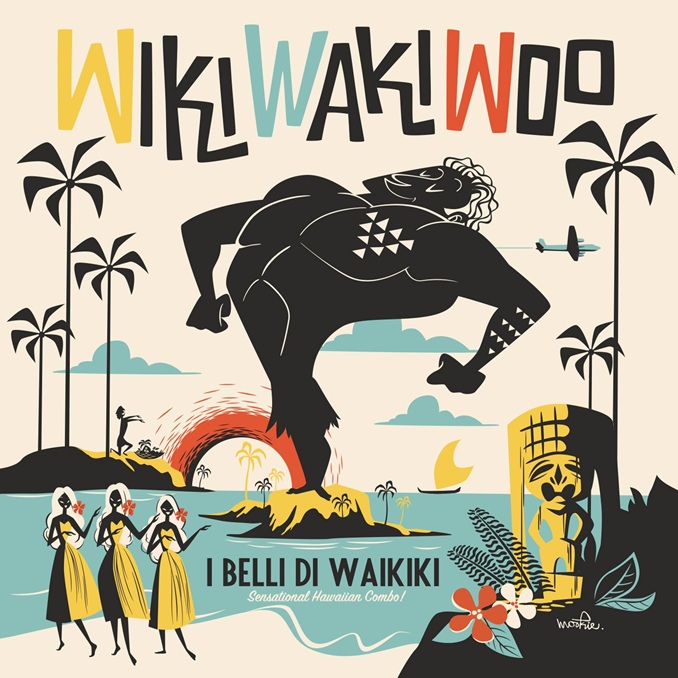
WIKI
WAKI WOO/ I BELLI DI WAIKIKI
We worden oud: Aloha, het debuut album van I Belli Di Waikiki, is ook al meer dan 25 jaar geleden. Ze komen heus niet uit Waikiki maar gewoon uit Treviso van waaruit ze als namaak Hawaiianen menig rock 'n' roll festival verblijden met hun vrolijke opgewekte muziekjes die als hoofdinstrument het speelgoedgitaartje genaamd ukelele bezigen, aangevuld met percussie, steel gitaar en contrabas: geen rockabilly maar rockahula oftewel Blue Hawaii made in la bella Italia. Heus niet alleen Hawaiiaanse muziek overigens, maar ook calypso, Italiaans variété en covers van oude songs in die stijl, en dat waren er best veel want ooit was everything hula dé rage in Amerika. Vooral sinds hun Sailormen Are Coming To Town uit 2014 zetten ze meer in op de rock 'n' roll gitaar, en ook deze nieuwe rockt, luister naar opener Hawaiian Rock (Tommy Sands), Rock Around The Island (The Lancers) en de eigen nummers (?) The Girl Of Molokai en titeltrack Wiki Waki Woo. Daardoor worden I Belli Di Waikiki meer een hawaiian themed rockabilly band dan dat leuke semi-akoestisch bandje met de ukelele - op geluidsdrager in elk geval. Stokoude Hawaiiaanse classiekers - of op zijn minst Hawaaiiaanse liedjes uit andere genres die van begin jaren '60 teruggaan tot het begin der tijden - als Maui Girl, Hula Blues, My Wahine And Me en Keep Your Eyes On The Hands wisselen weer af met covers als The House Of Bamboo van de exotische Brit Neville Taylor, bekender van crooner Andy Williams en recenter ook gecoverd door Southern Culture On The Skids en Hillbilly Moon Explosion. Een streepje cha cha cha (Luhau Cha Cha Cha van Annette Funicello), calypso (Coconut Water dat ik enkel ken van Robert Mitchum's calypso LP), zazou swing (I'm Pau), italiana (Notti Delle Hawaii) en vooral veel goede luim, de occasionele raspende kazoo en hun aandoenlijk Engels met een accent ontbreken niet: ze blijven "heyes" zingen in plaats van "eyes". De zomer mag beginnen, en in afwachting mixen wij alvast een lekkere cocktail. Laat ik maar eens een wiki waki woo proberen, want die bevat vodka, tequila, amaretto, rum én triple sec. Lekkerder dan coconut water! Ook uit op Bullseye vinyl LP BE 164 met gatefold hoes of zoals wij vroeger gewoon zegden een openklapbare hoes. Info: www.eltororecords.com en www.ibellidiwaikiki.com (Frantic Franky)
We’re getting old: more than 25 years ago I Belli Di Waikiki released their debut album Aloha. They’re not from Waikiki though, but simply from Treviso, from where disguised as fake Hawaiians they delight many a rock ’n’ roll festival with their cheerful upbeat tunes featuring the toy guitar known as the ukulele as their main instrument, complemented by percussion, steel guitar and double bass: not rockabilly but rockahula, or Blue Hawaii made in la bella Italia. It’s not only Hawaiian music either, but also calypso, Italian variety music and covers of old songs in that style — and there exist quite a few of those because at one time everything hula was all the rage in America. Especially since their 2014 album Sailormen Are Coming To Town they’ve been focusing more on the rock ’n’ roll guitar, and this latest one rocks too — listen to the opening track Hawaiian Rock (Tommy Sands), Rock Around The Island (The Lancers) and presumably their own songs The Girl Of Molokai and title track Wiki Waki Woo. As a result I Belli Di Waikiki are becoming more of a Hawaiian themed rockabilly band than that cute semi-acoustic band with the ukulele — at least on record. Vintage Hawaiian classics — or at least Hawaiian themed songs from other genres dating back from the early sixties to the dawn of time - like Maui Girl, Hula Blues, My Wahine And Me and Keep Your Eyes On The Hands alternate with covers like The House Of Bamboo from the exotic Brit Neville Taylor, better known from crooner Andy Williams and in more recent times covered by Southern Culture On The Skids and Hillbilly Moon Explosion. A bit of cha cha cha (Annette Funicello’s Luhau Cha Cha Cha), calypso (Coconut Water which I only know from Robert Mitchum’s calypso LP), zazou swing (I’m Pau), Italian variety (Notti Delle Hawaii) and above all plenty of good humor, the occasional raspy kazoo and endearing English with an Italian accent (they keep singing “heyes” instead of “eyes”) are all part of the ingredients. Let the summer begin, and while we await its arrival we’ll mix up a tasty cocktail. I think I’ll try a wiki waki woo, for that one contains vodka, tequila, amaretto, rum ànd triple sec. Better than coconut water! Also available on Bullseye vinyl LP BE 164 with a gatefold sleeve. Info: www.eltororecords.com and www.ibellidiwaikiki.com (Frantic Franky) |
12 mei 2026
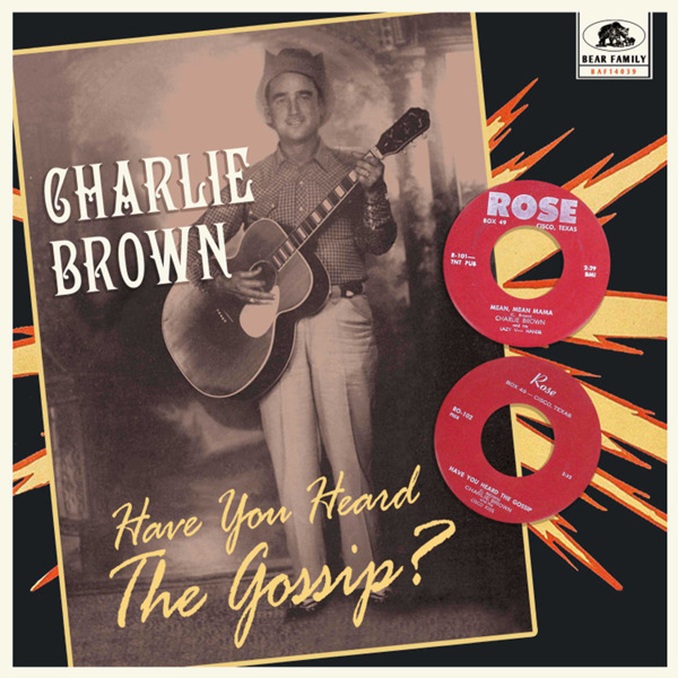
HAVE
YOU HEARD THE GOSSIP?/ CHARLIE BROWN
Charlie
Brown (de zanger, niet het Peanuts stripfiguurtje dat overigens ook
uit de jaren '50 dateert) heb ik leren kennen via zijn in 1978 in
Nederland door Cees Klop uitgebrachte White Label split WLP 8804 met
Mack Banks getiteld Rock-A-Billy And Country, maar de eerlijkheid
gebiedt me te vertellen dat ik Mack Banks' kant veel meer heb gedraaid
dan Charlie Brown omdat ik zijn nummers Be Boppin' Daddy, Mack's Boogie,
You're So Dumb en They Raided The Joint sneller, wilder en in de laatste
twee gevallen moderner vond. Banks was de rockabilly, Brown de country,
quoi. De zeven Charlie Brown tracks van die LP zijn nu dankzij Bear
Family beschikbaar op een 10 track 10 inch 45 toeren vinyl (die 45
toeren geven volgens audiofielen meer dynamica, al blijft de vraag
hoe je muziek uit 1955 kan combineren met audiofilie). Charlie Brown
bracht in zijn hele carrière welgeteld twee singles uit, beide
in 1955, waarvan Mean Mean Mama pure hillbilly boogie is: de gitaar
speelt een medium tempo boogie, de piano valt in en begeleidt, de
eerste solo wordt gespeeld door een steel gitaar, de tweede door een
elektrische boogie gitaar. B-kant My Hungry Heart was een zelfs voor
1955 al ouderwetsche trage. Brown's reputatie in de rockabilly berust
echter op zijn tweede single, Have You Heard The Gossip, een nauwelijks
verhuld doorslagje van Good Rockin' Tonight dat goed aantoont hoe
de rockabilly ontstond uit die hillbilly, want de hillbilly elementen
worden verrockt: het nummer is uptempo in rockabilly picking stijl
met een op Scotty Moore leest aangevuurde gitaarsolo en een geprononceerder
piano, met B-kant Don't Put The Blame On Me helemáál
boppende rockabilly. Dat deze single meer mikte op een tienerpubliek
blijkt ook uit de groepsnaam Charlie Brown & his Cisco Kids, in
tegenstelling tot Charlie Brown & his Lazy V-Hands zoals het op
Mean Mean Mama stond. Vreemd genoeg omschreef de platenfirma, zijnde
Charlie Brown zelf want hij bracht dit uit in eigen beheer, de single
als country 'n' western, misschien om de oerconservatieve hoek in
Texas waar hij vandaan kwam niet voor het muzikale hoofd te stoten.
I discovered Charlie Brown (the singer, not the Peanuts cartoon character
who's also from the fifties) through his 1978 White Label split WLP
8804 with Mack Banks titled Rock-A-Billy And Country, released in
the Netherlands by Cees Klop, but the truth is that I played Mack
Banks’ side a lot more than Charlie Brown’s because I
considered his songs Be Boppin’ Daddy, Mack’s Boogie,
You’re So Dumb and They Raided The Joint faster, wilder, and
— in the case of the last two — more modern. Banks was
the rockabilly side, Brown the country side, so to speak. Thanks to
Bear Family the seven Charlie Brown tracks from that LP are now available
on a 10 track 10 inch 45 RPM (according to audiophiles 45 RPM sounds
more dynamic, although the question remains how to combine music from
1955 with audiophile hi fidelity). Charlie Brown released exactly
two singles in his entire career, both of 'em in 1955, of which Mean
Mean Mama is 100 % hillbilly boogie: the guitar plays a medium tempo
boogie, the piano kicks in and provides accompaniment, the first solo
is played by a steel guitar, the second by an electric boogie guitar.
Flip side My Hungry Heart was a slow song that probably already sounded
old fashioned in 1955. Brown’s rockabilly reputation rests on
his second single, Have You Heard The Gossip, a hardly disguised cover
of Good Rockin’ Tonight that clearly demonstrates how rockabilly
emerged from hillbilly, as the hillbilly elements are given a rockin'
twist: the song is uptempo rockabilly picking with a guitar solo inspired
by Scotty Moore and a more pronounced piano, while the flip, Don’t
Put The Blame On Me, is pure boppin' rockabilly. It's also clear from
the band name Charlie Brown & his Cisco Kinds, as opposed to Charlie
Brown & his Lazy V-Hands as it said on Mean Mean Mama, that this
single was aimed more at a teenage audience. Oddly enough the record
company — or rather Charlie Brown, since he released both 45s
himself — described the single as country ‘n’ western,
perhaps not to offend the ultra conservative home base in Texas where
he lived. |
CD Recensies
YOU
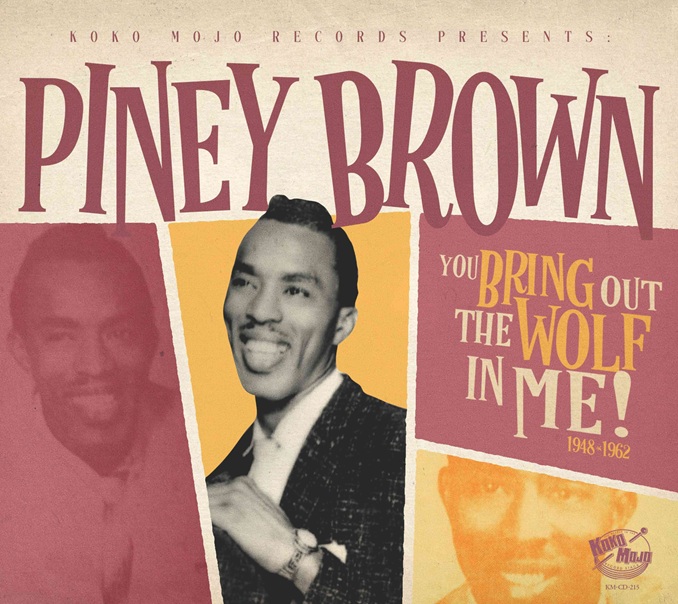
BRING OUT THE WOLF IN ME/ PINEY BROWN
Het enige dat ik ken van Piney Brown is het sappige Ooh You Bring
Out The Wolf In Me waarin ie klinkt als een vettige nonkel, kwijlend
en huilend als een tekenfilm wolf over de deerne zijner keuze tegen
een al even gemene gitaar, een merkwaardig doch fascinerend en uiteindelijk
onweerstaanbaar stukje rock 'n' roll, notabene uit 1953. In zulks
geval is het interessant wanneer er plots uit het niets een CD opduikt
met maar zo maar eventjes 26 nummers van hem, voor zover mij bekend
de eerste Piney Brown verzamelaar ooit. Negen van de tien keer is
dat echter van hetzelfde laken een pak als al die full CD’s
van rockabillies die uiteindelijk één rock 'n' roll
single blijken te hebben gemaakt en voor de rest van hun leven alleen
country. Benieuwd hoe dat met Piney Brown zit, want groot was mijn
verbazing toen ik las dat hij opnam van 1947 tot 2006!
The only Piney
Brown song I know is the juicy Ooh You Bring Out The Wolf In Me in
which he sounds like a dirty old man drooling and howling like a wolf
over the girl of his choice against an equally nasty guitar —
a strange yet fascinating and ultimately irresistible bit of rock
‘n’ roll, from 1953, no less. In such a case it’s
interesting when a CD suddenly pops up out of nowhere with no fewer
than 26 of his songs, as far as I know the first Piney Brown compilation
ever. Nine times out of ten however it’s the same old story
as with all those full length CDs of rockabilly artists who turn out
to have only ever released one rock ’n’ roll single and
played nothing but country for the rest of their lives. I’m
curious to see what Piney Brown's been doing, as I was quite surprised
to read that he recorded from 1947 to 2006! The CD contains, again
to the best of my knowledge, all the 26 tracks Brown released up to
1962 (it does not include any previously unreleased tracks), comprising
both sides of his eleven 78s and singles from 1948 to 1962, one duet
single with Billy Brooks as The Blues Toppers Brooks & Brown,
one track as vocalist for Ed Wiley’s band (no idea who sang
its B-side West Indies Blues, which might have an instrumental), and
one track recorded in 1947 which oddly enough only appeared only in
England on a split 78 RPM. |
6 mei 2026
IT'S
ALL CHANGED/ LEW LEWIS & HIS ALL STAR TRIO
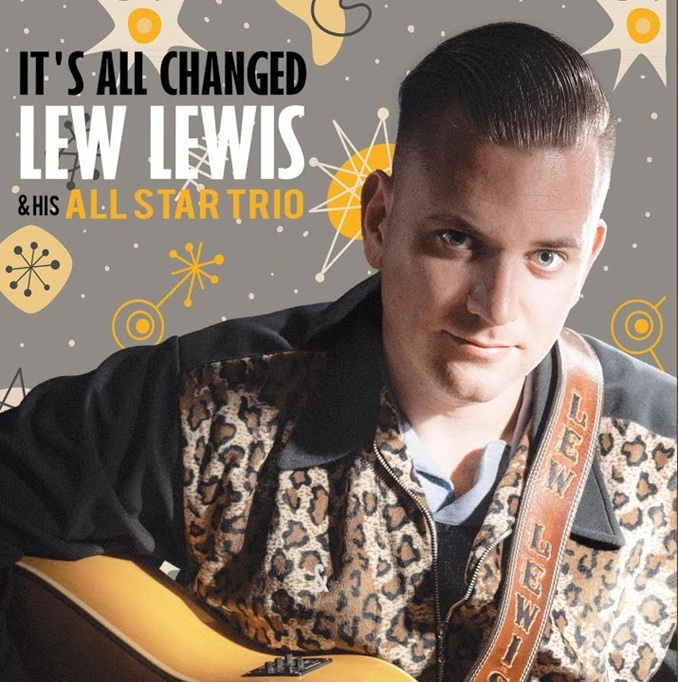
Voor zover mij bekend is dit het vijfde album van deze relatief jonge Brit uit Kent (relatief omdat ie intussen toch ook al vijftien jaar of zo bezig is) en het eerste dat niet verschijnt onder de bandnaam The Twilight Trio maar als The All Star Trio, en die sterren zijn swing gitarist Dragon Zac Zdravkovic (Inteli-Gents, Jive Romeros), contrabassist Kieran King (Vinters Boys) en drummer Les Curtis (Darrel Higham & the Enforcers, Bamboozle). Ik heb niet alle albums van Lew Lewis, maar It's All Changed is inderdaad een verandering omdat het minder urgent klinkt als Who I Am uit 2012 of Red Hot Baby uit 2014. Minder urgentie met meer nadruk op melodie, want het geheel ten goede komt. Dat zat er in het verleden natuurlijk ook al voor een stuk in, ik denk aan nummers als Be Mine Tonight en What Might Have Been, maar nu staat It's All Changed helemaal vol met dat soort songs (elf in totaal, alle elf zelfgeschreven) en daar ben ik niet rouwig om. Lewis' stem klinkt als Joey Simeone van The Bellfuries, en eigenlijk klinken ook de melodieën hier even frivool en inventief als The Bellfuries, met minder songs die bestaande songs met een nieuwe tekst zijn. Het geheel steekt in een muzikale begeleiding van soms rockabilly (Fine Lookin' Lady) met enerzijds twang en anderzijds Shadows gitaren (titeltrack It's All Changed), soms pizzicato (Broken). Speelse oorwurmen als This Is How I Feel wisselen af met een sneetje Johnny Cash (When I'm With You) en minder voor de hand liggend Gene Vincent (Yes Indeed). Op how Could You Love Me doet een steel gitaar mee, en met Love Some More met mondharmonica en maracas staat er gewoontegetrouw weer een Bo Diddley rocker op. Dit aanradertje voor wie een boon heeft voor melodieuze rockabilly werd origineel door Lew Lewis vorig jaar in eigen beheer uitgebracht maar krijgt nu een verdiende herkansing via het Finse label Moondog Music Oy. Info: www.facebook.com/lewlewisoffical en www.moondogmusic.fi (Frantic Franky)
This is as far as I'm aware the fifth album by this relatively young cat from Kent (relatively, as he’s actually been about for some fifteen years now) and the first one not under band name The Twilight Trio but as The All Star Trio, featuring swing guitarist Dragon Zac Zdravkovic (Inteli-Gents, Jive Romeros), double bass player Kieran King (Vinters Boys) and drummer Les Curtis (Darrel Higham & the Enforcers, Bamboozle). I don’t have all of his albums, but It’s All Changed heralds indeed a change for it sounds less urgent than 2012's Who I Am or 2014's Red Hot Baby. Less urgent with more emphasis on melody, which benefits the whole thing. This was of course to some extent already present in the past — I’m thinking of songs like Be Mine Tonight and What Might Have Been — but this time around It’s All Changed is filled to the brim with this kind of songs (eleven in total, all of them self-penned), and I for one I'm all for it. Lewis’ voice sounds like Joey Simeone of The Bellfuries, and in fact the melodies here sound as playful and inventive as The Bellfuries, with fewer songs that are basicly existing songs with new lyrics. The whole thing is set to a musical accompaniment that ranges from rockabilly (Fine Lookin' Lady) with on the one hand twang and on the other hand Shadows style guitars (title track It's All Changed) to pizzicato (Broken). Frivolous earworms like This Is How I Feel alternate with a touch of Johnny Cash (When I'm With You) and a less common nod to Gene Vincent (Yes Indeed). How Could You Love Me features steel guitar and Love Some More with its harmonica and maracas is the habitual Bo Diddley style rocker. This must-have for anyone with a soft spot for melodic rockabilly was self-released by Lew Lewis last year but is now getting a well deserved second chance thanks to the Moondog Music Oy label from Finland. Info: www.facebook.com/lewlewisoffical en www.moondogmusic.fi (Frantic Franky) |
LOST
IN... DRUMS/ VILHO "LITTLE-BEAT" VAINIO
Vilho Vainio is a Finnish drummer who, unlike many rock ‘n’
roll drummers, isn’t content to simply keep time by hitting
more or less the right drums and cymbals on more or less the right
beats, but apparently delves just that little bit deeper into the
drumming styles of various roots music genres. Quite remarkable, as
het was only fourteen years young when he recorded this last year!
I’m not familiar with the bands he’s played with (on YouTube
you can see him guest drumming with The Hi-Fly Rangers, B. Cupp Combo,
the Finnish Shadows band The Sleepwalkers, and the bands Gary Hiland
Trio, The Lovematches, The Rockabilly Boys and Nick Rumble & the
Rockers, all of which are completely unknown to me), but this is his
“solo” debut featuring four instrumental covers, released
on both CD and 10 inch vinyl format, with contributions from a whole
listt of musicians whose names mean nothing to me. If you want look
them up, go ahead: Masa Saloranta (bass), Rami Korhonen (guitar, six
string bass), Jupe Litmanen (drums, percussion), Antti Ikola (Hammond
organ), Juho Hurskainen (sax), Juha Rislakki, Ykä Putkinen, Arttur
Teränen, and Tuomas Metsberg (guitars). |

29 april 2026
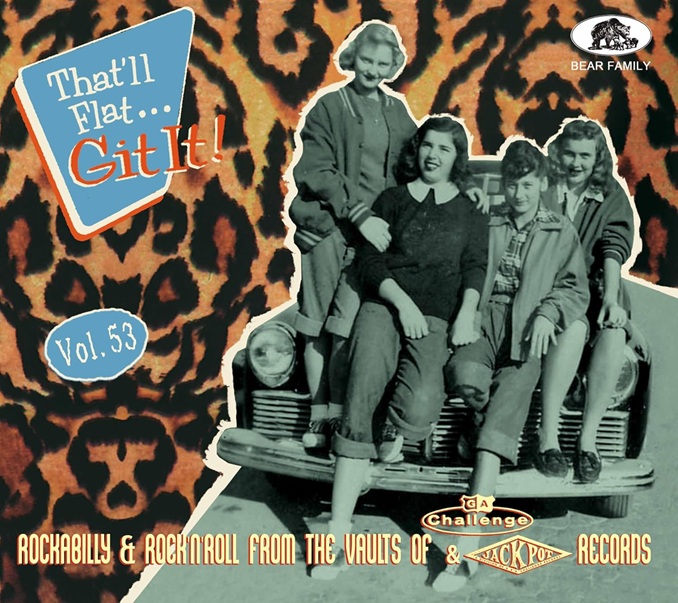
THAT’LL
FLAT GIT IT Vol. 53: ROCKABILLY & ROCK ‘N’ ROLL FROM
THE VAULTS OF CHALLENGE & JACKPOT RECORDS
Na
volume 51 is dit de tweede Flat Git It CD gewijd aan Challenge en
onderafdeling Jackpot Records, begin 1957 opgericht door Gene Autry
die door had dat het tijdperk van de zingende film cowboys definitief
achter hem lag en trachtte zijn zakelijke investeringen te diversifiëren.
De grote kindervriend zou zijn aandelen in Challenge reeds eind 1958
verkopen aan zijn partners, maar Challenge bleek een blijvertje dat
het uithield tot eind jaren '60, en al is het dan nu misschien geen
household name meer, ze brachten toen wel degelijk goeie rock 'n'
roll uit. Een aantal namen van de eerste Challenge CD komen terug,
bijvoorbeeld Wynn Stewart met een alternatieve Take 3 met studio count
in van een zo te horen iets snellere versie van de geweldige rechtdoor
jiver Come On dan op de eerste Challenge/Jackpot CD. Zijn She Just
Tears Me Up, ook met (een hele korte) studio count in, rockt iets
voorzichtiger. Een andere alternatieve en volgens mij snellere versie
is de Juliet van Huelyn Duvall, een artiest die lijkt op te duiken
op élke rockabilly compilatie. Geen probleem voor mij, want
hij heeft schijnbaar al zijn nummers meerdere keren opgenomen en ik
hoor graag zijn melodieuze stem en zijn frisse, speels opgewekte aanpak.
Een tweede voorbeeld daarvan horen we in Hum-Dinger. Op de CD staat
ook een minder perfect gezongen en gespeeld Juliet door Jerry Arnold
die op dezelfde manier ook Duvall's Three Months To Kill aanpakt.
Beide opnames bleven onuitgebracht en waren misschien slechts bedoeld
als demo? Arnold's enige Challenge single was vreemd genoeg een cover
van opnieuw een nummer van Duvall notabene een maand eerder verschenen
op Challenge, de ballade Little Boy Blue. After Volume 51 in the series this
is the second Flat Git It CD dedicated to Challenge and its subsidiary
Jackpot Records, founded in early 1957 by Gene Autry who realized
that the golden era of the singing movie cowboy was definitively over
and sought to diversify his business investments. The great friend
of children would already sell his shares in Challenge to his partners
by the end of 1958, but the label turned out to last until the end
of the sixties, and while it may no longer be a household name today
they certainly recorded some mighty fine rock ’n’ roll.
Several names from the first Challenge CD reappear, for example Wynn
Stewart with an alternate Take 3 with a studio count-in of what sounds
like a slightly faster version of his great straightforward jiver
Come On than the master released on the first Challenge/Jackpot CD.
His She Just Tears Me Up, also with (a very short) studio count-in,
rocks a bit more cautiously. Another alternate and in my opinion faster
version is Juliet from Huelyn Duval, an artist who seems to pop up
on every rockabilly compilation. No problem for me, for he apparently
recorded all of his songs multiple times, and I love hearing his melodious
voice and his fresh playfully upbeat approach. Hum-Dinger is a second
example. The CD also includes a vocally and instrumentally less perfect
Juliet by Jerry Arnold who tackles Duvall’s Three Months To
Kill in much the same way. Both recordings remained unreleased and
were perhaps merely intended as demos? Oddly enough Arnold’s
only Challenge single was a cover of yet another Duvall song which
Duvall himself had out on Challenge just a month before, the ballad
Little Boy Blue. |
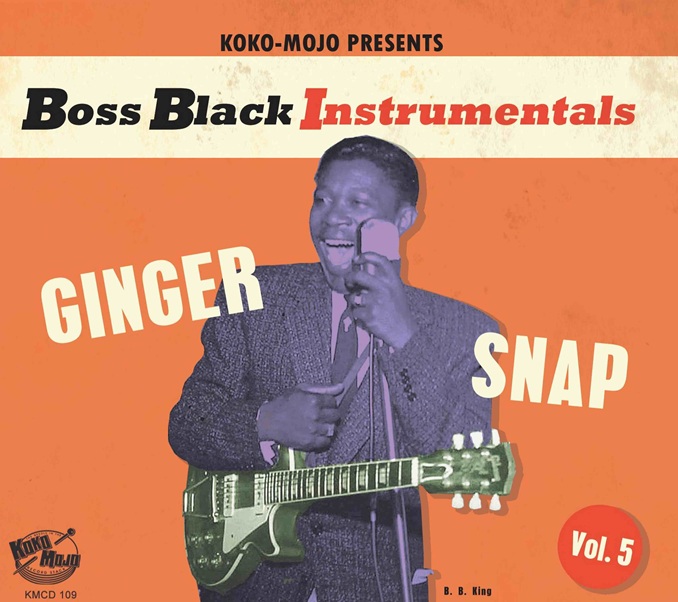
GINGER
SNAP: BOSS BLACK INSTRUMENTALS Vol. 5
Zwarte
instrumentals staan voor saxofoons, orgel, rhythm 'n' blues gitaren
en mondharmonica, en wie zich reeds een van de vorige volumes aanschafte
weet wat ie kan verwachten. De CD opent met een bekende melodie, Susie
Q, uiteraard een magische riff, hier netjes doch ietsiepietsie sneller
gekopieerd door Billy & the King Bees die de zanglijn vervingen
door sax. Bekende artiesten zijn Jimmy Reed met de rechtdoor gitaar
boogie Boogie In The Dark, BB King die een eind weg improviseert op
zijn gitaar in het uptempo Don't Touch, en saxofonist Buddy Lucas
wiens sfeervolle blues instrumental Show Down evenveel zo niet meer
gitaar en mondharmonica bevat als sax want die valt pas in na twee
derde van het nummer. Ginger Snap van The Exotics dat de CD zijn titel
gaf en Bui Bui van L. Hollis & the Mackados hebben iets jungle
exotica-achtig, er is bluesy mondharmonica met Haze Hart (Red River
Shuffle), en Reggie Boyd friemelt een paar spacy geluiden uit zijn
gitaarsnaren voorbij de brug in het voor de rest vrij standaard en
erg jammend klinkende Nothing But Good. De Partying Groove van RD
Stokes is gebaseerd op die van Booker T & the MG's gekoppeld aan
een rondje Honky Tonk boogie, en in die optiek mag het resultaat geslaagd
worden genoemd. Ook The Parkays (zinspeling op The Mar-Keys en The
Bar-Kays?) gaan Booker T & the MG's achterna, zelfs titelgewijs
met Green Monkeys. Nòg funkier groovend zijn het leger uptempo
saxofoons in het gelid in Jimmy McCracklin's Trottin en Big Bo Thomas'
How About It, en tragere nummertjes van Mack Johnson (het wat New
Orleans klinkend In The Dog House), The Furys (The Storm) en Googie
Rene (Rowdy Dowdy). Helemáál boogaloo gaan de orgeltjes
in Dawn (David Rockingham Trio) en Slipping In (Lee Walker), terwijl
de overstuurde Temps (Braggin') en Ho-Dads (Honky dat een tragere
Braggin' lijkt) net geen sixties garage psychedelica zijn. Veel sixties
of in elk geval early sixties trouwens op deze CD want zo klinken
ook The Mixtures (The Last Minute) en Whispering Smith (Harmonica
Twist, geen twist maar uiteraard wel mondharmonica). Op veel van de
nummers hier kan trouwens gestrolld worden. Met Herb Hardesty is iets
vreemds aan de hand, want de saxofoon is volledig weggevallen op zijn
Chicken Twist, je hoort ze nog net ergens heel ver weg. Het lijkt
alsof er iets mis is gegaan in de mastering en één kanaal
is weggevallen van een fake stereo single, met als resultaat dat er
één lange Bo Diddley groove overbleef. Bo Diddley zelf
brengt iets meer variatie aan in zijn The Twister dat opnieuw niets
te maken heeft met de twist maar eerder één lange uptempo
gitaar niet uitzonderlijk inspiratievolle improvisatie lijkt. Een
andere Bo was Big Bo Thomas en het twist ritme van zijn gezellige
Big Bo's Twist op Duchess Records (dat was toch de bijnaam van Bo
Diddley's gitariste?) gaat richting frat rock. Black instrumentals equals saxophones + organ + rhythm ‘n’ blues guitars + harmonica, and anyone who already purchased one or more of the previous volumes knows what to expect. The CD kicks off with a familiar melody and magical riff of Susie Q here played neatly and just a tad faster by Billy & the King Bees who replace the vocals with saxophone. Famous artists include Jimmy Reed with the straightforward guitar boogie Boogie In The Dark, BB King who improvises on his guitar in the uptempo Don’t Touch, and saxophone ace Buddy Lucas whose atmospheric blues instrumental Show Down contains as much if not more guitar and harmonica as sax which doesn’t kick in until two thirds of the track. The Exotics' Ginger Snap which gave the CD its title and L. Hollis & the Mackados' Bui Bui have a jungle exotica vibe, there’s some bluesy harmonica in Haze Hart's Red River Shuffle, and Reggie Boyd plucks some spacey sounds from his guitar strings beyond the bridge in the otherwise fairly standard and very jam sounding Nothing But Good. RD Stokes’ Partying Groove is based on Booker T & the MG’s groove paired with a bit of Honky Tonk boogie, and from that perspective the result can be deemed a success. The Parkays (a play on The Mar-Keys and The Bar-Kays?) also follow in the footsteps of Booker T & the MG’s, going as far as to title their instrumental Green Monkeys. Even funkier and groovier is the army of uptempo saxophones in Jimmy McCracklin’s Trottin’ and Big Bo Thomas’ How About It, as well as slower tracks by Mack Johnson (In The Dog House sounds a bit New Orleans), The Furys (The Storm) and Googie Rene (Rowdy Dowdy). The keyboards go fully boogaloo in Dawn (David Rockingham Trio) and Slipping In (Lee Walker), while the fuzzed out Temps (Braggin’) and Ho-Dads (Honky sounds like a slower version of Braggin’) are almost sixties garage psychedelia. There’s a lot of sixties or at least early sixties stuff on this CD and you can add to that also The Mixtures (The Last Minute) and Whispering Smith (Harmonica Twist, not a twist but a harmonica instrumental). Many of the tracks are perfectly suited for strolling by the way. Herb Hardesty seems to have a problem because the saxophone has completely disappeared from his Chicken Twist: it comes from very far away and it's hardly audible. Seems like something went wrong during the mastering and one channel dropped out of a fake stereo single, resulting in one long Bo Diddley groove. Bo Diddley himself brings a bit more variety to his The Twister which again has nothing to do with the twist but rather seems like one long uptempo but not particularly inspired improvisation on the guitar. Another Bo was Big Bo Thomas, and the twist rhythm of his lively Big Bo’s Twist on Duchess Records (wasn’t that the nickname of Bo Diddley’s guitarist?) leans toward frat rock. If you're not put off by all those ’60s sounds you will love these 26 tracks, 27 actually since Big Bo Thomas's How About It consists of Parts 1 and 2 strung together. Info: www.vintagerockinroots.com (Frantic Franky) |
15 april 2026
THE
WORLD IS PINK
Géén 50 shades of grey maar 30 traces of pink: als er
één kleur is die symbool staat voor de jaren '50 dan
is het zuurstokroze: Elvis droeg kauwgumroze broeken en de knalroze
Cadillac waar hij mee rondreed behoort tot de universeel herkenbare
jaren '50 beeldvorming. De zwart-witte in legergroen en camouflagebruin
gedrenkte oorlogsjaren maakten plaats voor zachte pasteltinten als
muntgroen en baby blauw, tot aan de jaren '50 en al dat roze een symbolisch
einde kwam toen president John F. Kennedy in 1963 werd doodgeschoten
en zijn rode bloed en roze hersenen over first lady Jackie Kennedy's
roze Chanel mantelpakje spatten, de aanloop naar de kleurexplosie
van de bontgekleurde jaren '60 en de jaren '70 die zo oranje waren
dat je ogen er pijn van deden. Voorbeelden van think pink waren in
de jaren '50 Dodie Stevens' Pink Shoe Laces, al even teen pop als
A White Sport Coat (And A Pink Carnation), nummer onafscheidelijk
verbonden met Marty Robbins, maar de cover van Johnny Desmond hier
mag er desalniettemin best wezen. Johnnie Ray's carrière liep
tegen 1957 al op zijn laatste poten maar het swayende Pink Sweater
Angel was dat jaar even expressief en dynamisch zij het iets beheerster
als zijn grote hit Cry. Pink Champagne van The Tyrones (zang: George
Leser) is uiterst jive-bare piano-sax zogenaamde "house rock
'n' roll" dubbel zo snel als de originele versie van een zwart
nummer van Joe "Honeydripper" Liggins uit 1950. Hetzelfde
nummer wordt in een heel ander, trager arrangement geserveerd als
bluesy big band met vibrafoon door Lionel Hampton, en er staat nog
een derde versie op de CD, als live in een nachtclub opgenomen uptempo
zwarte boogie woogie sax door Rusty Bryant & the Carolyn Club
Band. Liggins' origineel staat niét op de CD. The Pink Panther
op de CD is niet het Henry Mancini thema van de blunderende politie
inspecteur uit de films die het gelijknamige tekenfilmfiguurtje voortbrachten
maar een stop-start doo-wopper van The Tads. Dat nummer werd meer
rock 'n' roll gecoverd door meestergitarist Al Casey, al hoor je er
nog steeds zowel de doo-wop als de zwarte origine in. Sherry Pink
van saxofonist Vido Musso is een uptempo instrumentale jazz improvisatie
die flink honkt. Nog meer instrumentaal werk is orkestleider Sonny
Lester's Perfume And Pink Chiffon van zijn LP How To Strip For Your
Husband uit 1962 dat meer te maken heeft met naar de jaren '40 lonkende
rustige easy listening swing dan met burlesque, een enkele melodieflard
niet te na gesproken. Pinkie van Earl Bostic is een vrolijke uptempo
sax rocker, en er is een brokje variété pop met Mitchell
Torok (Pink Chiffon), Vicki Young (Pink Shampoo met lichte banjo inslag)
en zelfs de universeel inzetbare Tennessee Ernie Ford (Pretty Little
Pink beïnvloed door Johnny Horton en Davy Crockett). De bekendste
Cherry Pink And Apple Blossom White is de instrumentale mambo van
Perez Prado, maar Georgia Gibbs levert een gezongen versie af met
een film arrangement in de plaats van de mambo, uiteindelijk misschien
geen verrassing want het nummer werd bedacht door Louis "Louiguy"
Guglielmi, de Franse filmcomponist die ook de melodie van La Vie En
Rose schreef. Waarlijk alles kon in die dagen pink, zelfs Hawaiiaanse
muziek: Pink Hawaii door de veelzijdige studiogitarist Billy Mure
met gelegenheidsgroep The Islanders.
No 50 shades of grey but 30 traces of pink: if there’s one color
that symbolizes the fifties, it’s cotton candy pink. Elvis wore
bubblegum pink pants, and the bright pink Cadillac he drove is part
of the universally recognizable fifties imagery. The black and white,
army green and camouflage colored war years gave way to soft pastel
shades like mint green and baby blue, until the fifties and all that
pink came to a symbolic end when president John F. Kennedy was assassinated
in 1963 and his red blood and pink brain splattered across first lady
Jackie Kennedy’s pink Chanel suit, the prelude to the color
explosion of the brightly colored sixties and the seventies which
were so orange it hurt your eyes. Examples of think pink in the fifties
include Dodie Stevens’ Pink Shoe Laces, as teen pop as A White
Sport Coat (And A Pink Carnation), a song inextricably linked to Marty
Robbins, even though Johnny Desmond’s cover here is quite good.
Johnnie Ray’s career was already on its last legs by 1957, but
the swaying Pink Sweater Angel that year was just as expressive and
dynamic albeit slightly more restrained than his big hit Cry. Pink
Champagne by The Tyrones (vocals: George Leser) is extremely jive-able
piano-sax so-called house rock ’n’ roll twice as fast
as the original version of this 1950 black Joe “Honeydripper”
Liggins song. The same song is presented in a completely different,
slower arrangement as a bluesy big band piece featuring vibraphone
by Lionel Hampton, and there’s also a third version on the CD
as an uptempo black boogie woogie sax piece recorded live in a nightclub
by Rusty Bryant & the Carolyn Club Band. Liggins’ original
is absent. The Pink Panther on the CD is not the Henry Mancini theme
of the bumbling police inspector from the films that spawned the cartoon
character of the same name, but a stop-start doo-wop number by The
Tads. That song was covered in a more rock ‘n’ roll style
by master guitarist Al Casey, though you can still hear both its doo-wop
and blues roots. Sherry Pink is an uptempo instrumental jazz improvisation
by saxophonist Vido Musso who knew how to honk, and there's more instrumental
workouts with band leader Sonny Lester’s Perfume And Pink Chiffon
from his 1962 LP How To Strip For Your Husband, which has more to
do with relaxed easy listening forties swing than with burlesque,
except for a few bars of the melody. Earl Bostic’s Pinkie is
a cheerful uptempo sax rocker, and there’s a bit of variety
pop with Mitchell Torok (Pink Chiffon), Vicki Young (Pink Shampoo
with a touch of banjo) and even the universally applicable Tennessee
Ernie Ford (Pretty Little Pink, influenced by Johnny Horton and Davy
Crockett). The best known Cherry Pink And Apple Blossom White is Perez
Prado’s instrumental mambo, but Georgia Gibbs brings us a vocal
version with a film score arrangement instead of the mambo, perhaps
not a surprise since the song was composed by Louis “Louiguy”
Guglielmi, the French film composer who also wrote the melody of La
Vie En Rose. Literally everything could be viewed through pink colored
glasses in those days, even Hawaiian music: check out Pink Hawaii
by the versatile studio guitarist Billy Mure with the one-off group
The Islanders. |
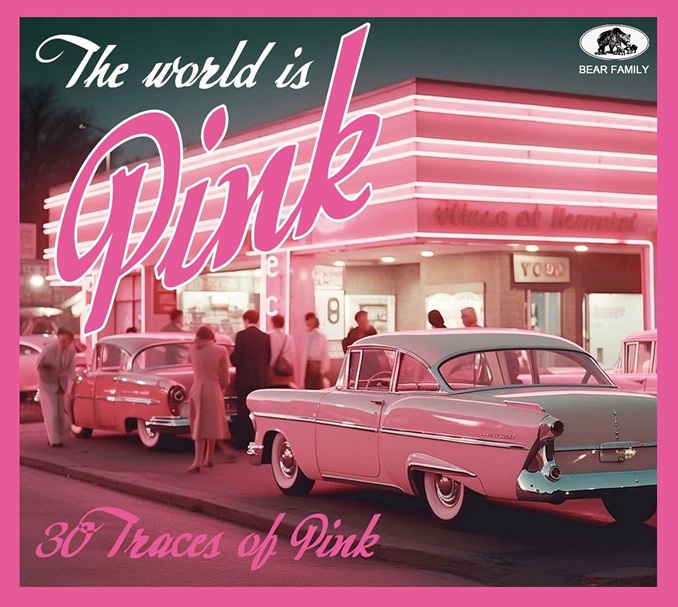
ROCKIN'
COUNTRY STYLE VOLUME 5
Het gaat snel, even snel als de muziek zelf, want hier is alweer nummer
5 in deze reeks met niet alleen rock 'n' roll diep verankerd in country
maar vooral country die je met wat goeie wil rockend kan noemen. Niet
te verwarren met de gelijknamige reeks op Classic Records (S) destijds
waarvan ook minstens vijf volumes verschenen! De ingrediënten
zijn bekend: shuffelende ritmes op alle mogelijke snelheden, honky
tonk pianos, fiddles, snerpende steel gitaren, een enkele verdwaalde
accordeon, jazzy swing (de trompet solo in Rockin' Too Much van Gary
Van & the Starlighters), fingerpickende billy (het ouderwetse
New Way Rockin van de allesbehalve hopeloze Hopeless Homer), semi-akoestische
fox chases op gospelbasis (The Life We Live van Jimmy Renfro &
his Memory Valley Boys met zang van Vernon Filler), veel inspiratie
en transpiratie uit western swing (Shine Shave And Shower van John
Talley & the Night Owls, de cornet in Cracker Barrel Farmer van
Gabe Tucker & his Musical Ramblers met achter de microfoon Charlie
Harris), plus een flinke scheet boppin' hillbilly (Gene Henslee's
Dig'n And Datin' dat nogal eens opduikt op rockabilly compilaties).
Felice & Boudleaux Bryant gaan hillbilly (en verbasterden daartoe
hun naam tot het toepasselijker Bood & Fileece Bryant) in Overweight
Blues, nummer in de stijl van de duetten van Tennessee Ernie Ford
& Jo Stafford maar nòg meer novelty, en ik heb zelfs het
gevoel dat Felice zoveel mogelijk in de stijl van Tennessee probeert
te zingen. Het nummer is tevens het bewijs dat Amerikanen reeds in
de jaren '50 te dik waren. Rosalie Allen klinkt in het zwoel strollende
It'd Surprise You als de hillbilly versie van Mae West, en er is zelfs
het country equivalent van de meidengroepen met The Apaapa Sisters
die de Train Of Love nemen (niet die van Johnny Cash maar met Paul
Anka als machinist) en in de solo heel rockabilly beginnen te klinken.
Coveren was in die tijd een olympische sport en de CD bevat verschillende
voorbeelden zoals een meer country geïnspireerd Singing The Blues
door Thumper Jones, het pseudoniem waaronder de jonge George Jones
een cent bijverdiende door hits te coveren voor budget labels. Buffalo
Johnson brengt een gitaar boogie versie van Frankie And Johnny (ook
Hobo Joe's Boogie van Luke Simmons & his Blue Mountain Boys is
een boogie) en Sixty Minute Man van The York Brothers is een gezapige
versie van een zwarte hit. Nog covers zijn Ernie Lee & his Southerners'
niks mis mee versie van Lefty Frizzell's If You Got The Money I Got
The Time en Rita Robbins' snellere versie van Jimmy Lee Fautheree
& Country Johnny Mathis' If You Don't Somebody Else Will - Robbins
covert wellicht Wanda Jackson's versie van dat opgewekte nummer uit
1954. Het krakendste nummer is Ray Moore & the Texas Pioneers'
hillbilly versie van That's All Right uit 1956, dus naar ik veronderstel
ná Elvis. Toch gek, Elvis die van een bluessong rockabilly
maakt, waarna iemand het opneemt in hillbilly stijl. Rockender gaat
het eraan toe bij het door saxofoon aangedreven Can't Play Hookey
van Tommy Wood (pseudoniem van Eddie Noack) en bij I Shot Sam, Margie
Word's antwoord op George Jones' Who Shot Sam, zelf een vervolg op
zijn eigen White Lightning. Geen cover maar de original is Johnny
Tyler's Oakie Boogie uit 1946, alweer een prima boogie. Andere namen
die een koeienbelletje doen rinkelen zijn Pee Wee King (de onweerstaanbare
jiver Hoot Scoot met Dick Glasser achter de microfoon), Hank Locklin
(de gestroomlijnde country swinger Baby You Can Count Me In), Frankie
Miller (het vlotte Lookin' Around Downtown) en Autrey Inman's You've
Got To Leave Those Other Guys Alone (hillbilly).
Things
move fast, as fast as the music itself, cos this is already number
5 in this series featuring not only rock ’n’ roll deeply
rooted in country music but above all country which with a little
good will one can call rockin'. Not to be confused with the series
of the same name on Classic Records (S) back in the day of also at
least five volumes! The ingredients are familiar: shuffling rhythms
at every possible speed, honky tonk pianos, fiddles, screeching steel
guitars, the occasional stray accordion, jazzy swing (the trumpet
solo in Gary Van & the Starlighters' Rockin' Too Much), fingerpicking
billy (the old fashioned New Way Rockin’ by the anything but
hopeless Hopeless Homer), semi-acoustic gospel based fox chases (Jimmy
Renfro & his Memory Valley Boys' (vocals: Vernon Filler) The Life
We Live), plenty of inspiration and perspiration from western swing
(John Talley & the Night Owls’ Shine Shave And Shower, the
cornet in Gabe Tucker & his Musical Ramblers' (vocals: Charlie
Harris) Cracker Barrel Farmer), and a hefty dose of boppin’
hillbilly (Gene Henslee’s Dig’n And Datin’ which
pops up quite often on rockabilly comps). Felice & Boudleaux Bryant
go hillbilly (and even changed their name to the more appropriate
Bood & Fileece Bryant) in Overweight Blues, a song in the style
of the Tennessee Ernie Ford & Jo Stafford duets but even more
novelty, and I even get the feeling that Felice is trying to sing
as much as possible in Tennessee’s style. The song is also proof
that Americans were already overweight back in the 1950s. In the sultry,
strolling It’d Surprise You Rosalie Allen sounds like the hillbilly
version of Mae West, and there’s even the country equivalent
of girl groups with The Apaapa Sisters boarding the Train of Love
(not Johnny Cash’s but with Paul Anka as the engineer), starting
to sound very rockabilly in the solo. Covering songs was an olympic
sport back then and the CD includes several examples like a more country
styled Singing The Blues by Thumper Jones, the pseudonym under which
a young George Jones earned a few extra bucks covering hits for budget
labels. Buffalo Johnson delivers a guitar boogie version of Frankie
And Johnny (Luke Simmons & his Blue Mountain Boys’ Hobo
Joe’s Boogie is also a boogie), and The York Brothers' Sixty
Minute Man is a laid back version of a black hit. Other covers include
Ernie Lee & his Southerners’ perfectly fine version of Lefty
Frizzell’s If You Got The Money I Got The Time and Rita Robbins’
faster version of Jimmy Lee Fautheree & Country Johnny Mathis’
If You Don’t Somebody Else Will — Robbins is likely covering
Wanda Jackson’s version of that upbeat 1954 song. The most raucous
track is Ray Moore & the Texas Pioneers’ hillbilly version
of That’s All Right from 1956, so I assume recorded after Elvis.
It’s funny though, Elvis turning a blues song into rockabilly,
and then someone recording it hillbilly style. Things get even more
rockin' with the saxophone fuelled Can’t Play Hookey by Tommy
Wood (Eddie Noack in disguise) and I Shot Sam, Margie Word’s
answer to George Jones’ Who Shot Sam, in itself a follow up
to his own White Lightning. Not a cover but the original version is
Johnny Tyler’s Oakie Boogie from 1946, yet another great boogie.
Other names that ring a bell include Pee Wee King (the irresistible
jiver Hoot Scoot with Dick Glasser on vocals), Hank Locklin (the streamlined
country swinger Baby You Can Count Me In), Frankie Miller (the smooth
Lookin’ Around Downtown) and Autrey Inman’s You’ve
Got To Leave Those Other Guys Alone (hillbilly). |
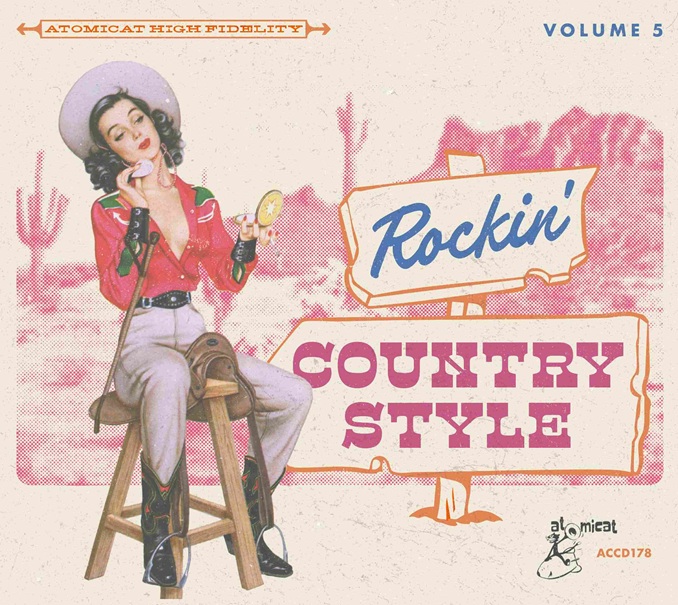
1 april 2026
CD Recensies
SOME
THINGS NEVER CHANGE/ CARL PERKINS
Een nieuwe plaat van Carl Perkins, da's straf, omdat de man die Blue
Suede Shoes schreef en als eerste opnam overleed in 1998 toen hij
slechts 65 jaar was, het einde van een carrière die begon met
wat een reuzehit had moeten worden maar voor zijn neus werd weggekaapt
door Elvis, een carrière vooral gekenmerkt door dikke pech.
Het zij zo, maar hij is toch maar mooi meer dan twintig jaar ouder
geworden als Elvis, met als bijeffect dat ik Carl Perkins live heb
gezien en Elvis niet. De opnames van Some Things Never Change werden
gemaakt in 1990, deels als zeven demo’s op band bij Carl Perkins
thuis in Jackson, Tennessee in zijn garage, deels drie studio opnames
gemaakt in Nashville, met zijn zonen Stan (drums) en Greg (bas), op
piano Joe Schenk die in die dagen wel meer bij Carl Perkins speelde,
en studio muzikanten Jerry Douglas (dobro, lap steel) en Pete Finney
(steel). Producer Bill Lloyd die de opnames destijds maakte en ze
nu bewerkte en hermixte, vond ze in 2024 terug op DAT, met als resultaat
tien songs, zijnde zes "nieuwe" nummers geschreven door
Carl Perkins waarvan eentje er in twee versies op staat, en drie covers:
Get Rhythm dat meer klinkt als een country cover van de americana
cover door Ry Cooder dan als Johnny Cash, Heart Of My Heart van een
vergeten lokaal bandje uit die dagen, en een meer rockabilly Memphis
In The Meantime van John Hiatt uit 1987 (naar ik lees was Hiatt's
reactie op Perkins's versie "Carl Perkins is what Memphis In
The Meantime is all about”). Die Memphis In The Meantime stond
in 2005 samen met Baby Bye Bye op de Bear Family CD Carl Perkins Rocks,
maar de overige tracks zijn nooit eerder verschenen. Dat resultaat
ligt nu, exact zeventig jaar nadat Blue Suede Shoes uitkwam, in de
winkel op CD en op splatter vinyl 015047815166, notabene op Sun Records
waarmee bijna dertig jaar na Perkins' verscheiden de cirkel rond is.
Verwacht u evenwel niet aan de Sun sound van Put Your Cat Clothes
On die Perkins trouwens nooit meer zelf heeft gerecreëerd sinds
zijn overstap van Sun naar Columbia in 1958? A
new Carl Perkins album, now there's something you don't see every
day! Not in the least because the man who wrote and first recorded
Blue Suede Shoes passed away in 1998 at the age of only 65, the end
of a career that began with what should have been a massive hit but
was snatched right from under his nose by Elvis, a career characterized
above all by sheer bad luck. Be that as it may he still lived more
than twenty years longer than Elvis, with the added bonus that I saw
Carl Perkins live on stage and never saw Elvis. The recordings for
Some Things Never Change were made in 1990, to be precise seven demos
laid down on tape in the garage at Carl Perkins’ home in Jackson,
TN + three studio recordings made in Nashville,with his sons Stan
(drums) and Greg (bass), on piano Joe Schenk who played with Carl
Perkins regularly back then, and studio musicians Jerry Douglas (dobro,
lap steel) and Pete Finney (steel). Producer Bill Lloyd who made the
recordings rediscovered them in 2024 on DAT, edited and remixed them,
resulting in ten songs: six “new” tracks written by Carl
Perkins, one of which appears in two different versions, and three
covers: Get Rhythm which sounds more like a country cover of Ry Cooder’s
americana cover than like Johnny Cash, Heart Of My Heart from a long
forgotten local band from those days, and a more rockabilly styled
version of John Hiatt's Memphis In The Meantime from 1987 (I read
that Hiatt’s reaction to Perkins’ version was “Carl
Perkins is what Memphis In The Meantime is all about”). Memphis
In The Meantime appeared in 2005 together with Baby Bye Bye on the
Bear Family CD Carl Perkins Rocks, but the other tracks have never
been published before. Exactly seventy years after the release of
Blue Suede Shoes you can buy them on CD and on splatter vinyl 015047815166,
even more remarkably on Sun Records, which brings Carl Perkins full
circle nearly thirty years his passing. But do not expect the Sun
sound of Put Your Cat Clothes On, a sound not even Perkins himself
ever recreated after he moved from Sun to Columbia in 1958. |
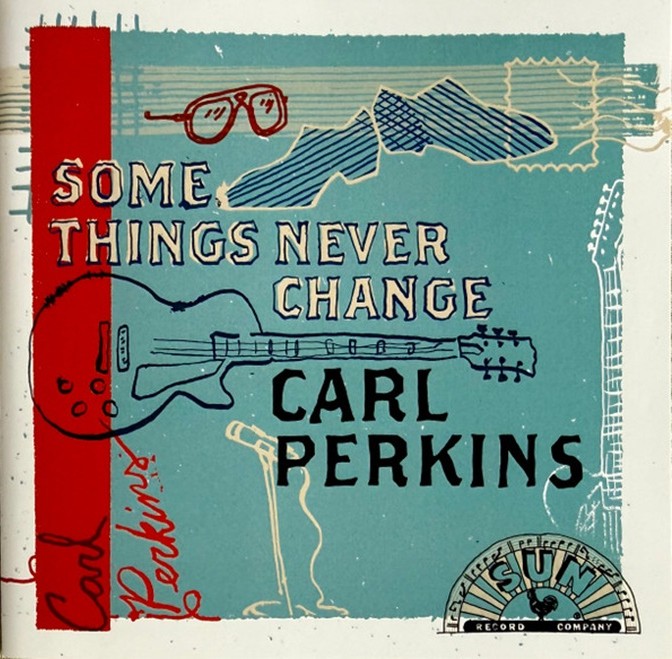
EPiC
- ELVIS PRESLEY IN CONCERT (ORIGINAL MOTION PICTURE SOUNDTRACK)
De film, gebaseerd op nooit eerder vertoond concertmateriaal gefilmd
voor That’s The Way It Is (1970), 16mm footage van Elvis On
Tour (1972) en 8mm home movies, moet ik nog steeds gaan kijken, de
soundtrack heb ik al. En daar valt toch een en ander over te zeggen.
Dat mag ik, want iedereen heeft er zijn zegje al over gedaan. Logisch,
want wat hier gepresenteerd wordt als 75 minuten "nieuwe Elvis"
met naar ik lees wat in de film werd ingekort in full version op geluidsdrager,
is sterk bewerkt, zeg maar gemanipuleerd. De vraag die zich daarbij
opdringt is uiteraard of dat nodig was. Wellicht ontbreekt mij de
bioskoop ervaring, maar heel veel van die 75 minuten klinken mij toch
raar in de oren. Ik ben onvoorwaardelijk Elvis fan, ook van de jaren
'70 Elvis, en ik heb al die live platen van de '68 Comeback Special
over From Memphis To Vegas (1969), On Stage (1970), That's The Way
It Is (1970), Aloha From Hawaii (1973), As Recorded At Madison Square
Garden (1972) en Elvis Recorded Live On Stage In Memphis (1974) tot
Elvis In Concert (1977) al allemaal een miljoen keer beluisterd. Ik
ken mijn Elvis en ik hou van mijn Elvis, waaraan wat mij betreft niets
dient gewijzigd of toegevoegd. Evenmin heb ik behoefte aan alle soundboards
en audience recordings van alle andere Elvis concerten, want beter
dan de officiële releases zijn ze nooit.
I still need to see the film, based on previously unseen concert footage
shot for That’s The Way It Is (1970), 16mm footage from Elvis
On Tour (1972) and 8mm home movies, but I already have the soundtrack.
And there’s a lot to say about it. Which I’m allowed to,
because everyone else already had their say. Which makes sense, for
what is presented as 75 minutes of “new Elvis” —
with according to what I read complete versions of songs cut short
in the film — is heavily tampered with, or rather manipulated.
The question is of course whether that was necessary. Perhaps I miss
the movie experience, but a lot of those 75 minutes sound strange
to me. Now I am an unconditional Elvis fan, including of the seventies
Elvis, and I have listened a million times to all the live albums
from the ’68 Comeback Special through From Memphis To Vegas
(1969), On Stage (1970), That’s The Way It Is (1970), Aloha
From Hawaii (1973), As Recorded At Madison Square Garden (1972) and
Elvis Recorded Live On Stage In Memphis (1974) all the way to Elvis
In Concert (1977). I know my Elvis and I love my Elvis, and as far
as I’m concerned there’s no need to change or add anything.
Nor do I feel the need for all the soundboard and audience recordings
from all the other Elvis concerts, because they never better the official
releases. |
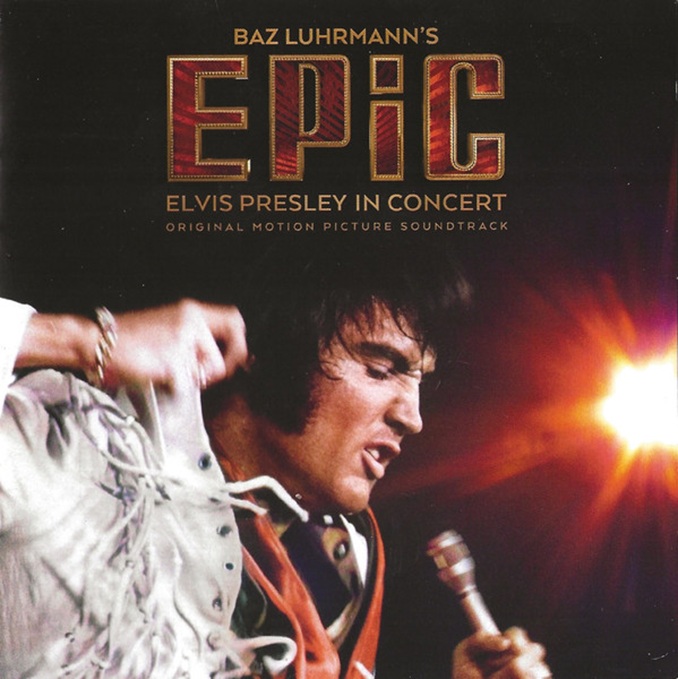
25 maart 2026
CD Recensies
ROCK
AND ROLL JUNGLE/ RING-DANG-DILLY
Nieuwe bands, laat ze maar komen, zeker als het handelt om scene veteranen:
Ring-Dang-Dilly (B), opgericht in 2024, zijn bekende kopjes Michel
Van Den Bosch (gitaar, Slick Nick & the Casino Special, Catslappin'
Chrissy), Erik Le Clerq (contrabas, Casablanca Carambol Company, Fabulous
Moonrakers) en Joris Govers (drums, Moonshine Reunion), dus eigenlijk
Revenuer Men zaliger (2020-2023) met een zangeres in plaats van een
zanger, want toen Revenuer Men frontman Tom Vloemans de muziek niet
langer kon combineren met zijn baan vond de groep zangeres Lorraine
Thompson. Omdat Revenuer Men And One Revenuer Woman niet bepaald vlotjes
over de tong rolt drong een naamswijziging zich op, en Ring-Dang-Dilly
was geboren. Dat is de titel van een swingende zwarte rock 'n' roll
song van Big Maybelle die ze wel live spelen maar niet op deze release
staat, en de zeven songs hier, opgenomen in de studio van ex-Moonshine
Reunion gitarist Kris Wouters, situeren zich inderdaad in die hoek.
Zes daarvan zijn covers van inderdaad zwarte nummers, maar de gebruikelijke
female rockers die elke band met een zangeres brengt zijn opvallend
afwezig, hoewel ze live bijvoorbeeld een gemene Fujiyama Mama neerzetten.
Integendeel horen we hier juist nummers die door mannen werden gezongen.
New
bands, bring 'em on, especially when they’re scene veterans:
Ring-Dang-Dilly (B) was formed in 2024 by familiar faces Michel Van
Den Bosch (guitar, Slick Nick & the Casino Special, Catslappin’
Chrissy), Erik Le Clerq (double bass, Casablanca Carambol Company,
Fabulous Moonrakers) and Joris Govers (drums, Moonshine Reunion),
basicly The Revenuer Men (2020–2023) with a female vocalist
replacing Revenuer Men frontman Tom Vloemans who could no longer balance
the music with his real job. When they found Lorraine Thompson it
became pretty obvious that The Revenuer Men And One Revenuer Woman
didn't exactly roll off the tongue so a new name was in order, hence
Ring-Dang-Dilly, the title of a swinging black rock ’n’
roll song by Big Maybelle which they do play live but is not on this
release. Six out of the seven songs here, recorded in the studio of
former Moonshine Reunion guitarist Kris Wouters, are in fact covers
of black songs, but the usual female rockers that every band with
a female singer plays are conspicuously absent, although they do play
a mean Fujiyama Mama live. On the contrary, these are precisely songs
that were sung by male performers. |
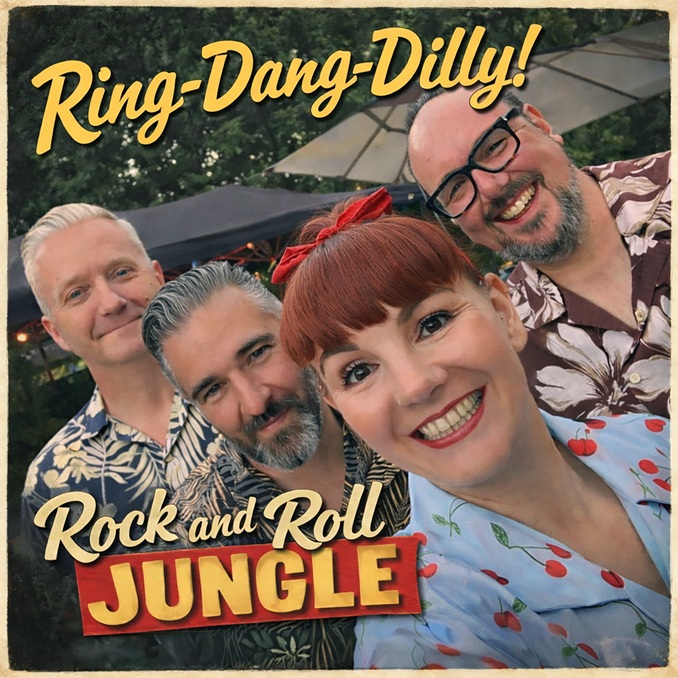
CD Recensies
AT
THE EDGE OF THE BLADE/ JOHNNY KNIFE & HIS RIPPERS
Derde
album van het uit leden van The Foggy Mountain Rockers, Rebels Revenge,
Matchless 59 en The Town Rebels bestaande Duits-Noorse samenwerkingsverband
wier muziek niet zozeer teddy boy is dan wel British rock 'n' roll,
vooral door de gedreven Shadows twang die in alle nummers zit en die
in 2012 al in hun debuutalbum Sinister Street zat. Hun tweede heette
in 2017 Sharp As A Razor en die gitaar is inderdaad messcherp, al
is zulke titel uiteraard een voor de hand liggende inkopper bij een
groepsnaam als Johnny Knife & his Rippers. Stonden op hun eerste
nog een paar covers van Britse classics en zelfs van één
revival song (Texas Calls You Home van The Flying Saucers), de opvolger
bevatte enkel eigen nummers, net als deze nieuwste met 15 eigen songs
opgenomen tussen 2019 en 2022. Tussen dat tweede en het recentste
album is er met gitarist Gianluca Murgia een vierde man bijgekomen
(altijd handig voor het klaverjassen onderweg) maar hun sound is niet
wezenlijk veranderd. Dat tweede album was misschien ietsje meer rechtdoor
en dat zit hier nog steeds in nummers als Cream Of The Crop, maar
het grootste verschil met nummer 2 en 3 is dat At The Edge Of The
Blade nog meer pop klinkt. Dat is niet nieuw: herbeluister de melodielijnen
en achtergrondkoortjes op songs als Break Up Today en het melodieuze
Fiddler On The Roof op Sinister Street, of op Sharp As A Razor nummers
als Time To Say Goodbye, het rechtdoor Forty Miles, het country getinte
Arrow en Keep On Loving You Baby met zijn artificiële strijkers
die op At The Edge Of The Blade terug opduiken in The Northern Lights,
Your Kisses Do Not Taste en Minute Of Your Time. Behouden zijn de
rockabilly invloeden (Too Far Gone), instrumentals (titeltrack At
The Edge Of The Blade), specifiek Britse thema songs als British Motorbike
en Chiswick Girl, en een nummer gezongen door gitarist Christian Hochmuth.
Dit keer staat er geen ted titel op, niet eerder gehoord bij Johnny
Knife & his Rippers is de saxofoon die onopvallend meedoet in
Tough And Mean. Third
album by the German-Norwegian collaboration of members of The Foggy
Mountain Rockers, Rebels Revenge, Matchless 59 and The Town Rebels
whose music is not so much teddy boy as it is British rock ’n’
roll, largely because of the driving Shadows style twang present in
every track, a sound already evident on their 2012 debut Sinister
Street. Their second album, released in 2017, was titled Sharp As
A Razor and that guitar is indeed razor sharp, though such a title
is of course an obvious choice for a band named Johnny Knife &
his Rippers. While their first album still included a few covers of
British classics and even one revival song, The Flying Saucers' Texas
Calls You Home, its follow-up contained only original material, just
like this here most recent release offering 15 selfpenned tracks recorded
from 2019 to 2022. Between that second album and the latest one the
trio became a quartet (always handy for playing cards on the road)
with the addition of guitarist Gianluca Murgia, although their sound
did not change significantly. That second album was perhaps a bit
more straightforward, which is still evident in songs like Cream Of
The Crop, but the biggest difference between album 2 and 3 is that
At The Edge Of The Blade sounds even more pop oriented. That's not
new: listen again to the melody lines and background harmonies on
songs like Break Up Today and the melodic Fiddler On The Roof from
Sinister Street, or to Sharp As A Razor tracks like Time To Say Goodbye,
the straight ahead Forty Miles, the country tinged Arrow and the artificial
strings on Keep On Lovin’ which reappear on At The Edge Of The
Blade in tracks like The Northern Lights, Your Kisses Do Not Taste
and Minute Of Your Time. Still present are the rockabilly influences
(Too Far Gone), instrumentals (the title track At The Edge Of The
Blade), specifically British themed songs like British Motorbike and
Chiswick Girl, and a track sung by guitarist Christian Hochmuth. This
time there is no song with “ted” in the title, and a first
for Johnny Knife & his Rippers is the saxophone somewhere in the
background of Tough And Mean. |
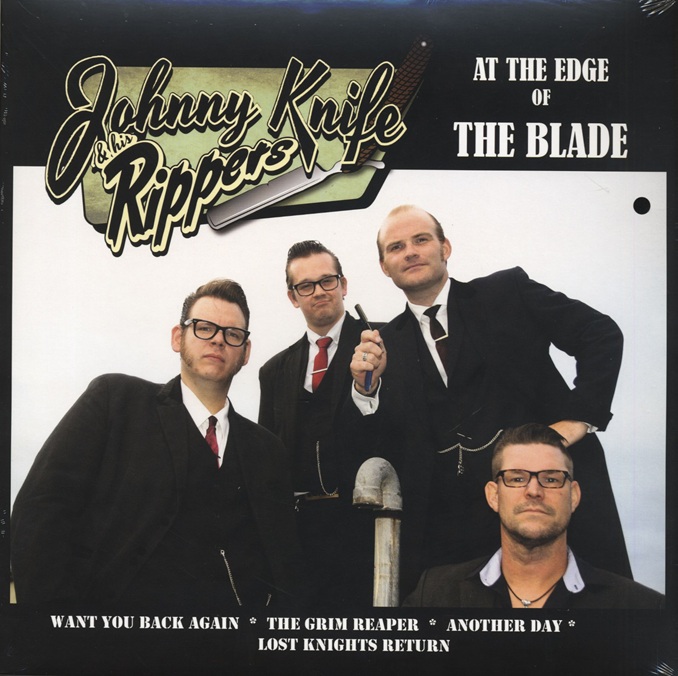
14 maart 2026
ROCKS/
JACKIE LEE COCHRAN
Heb
ik u al mijn persoonlijke Jackie Lee Cochran story verteld? Hoogstwaarschijnlijk
wel, maar vooruit, nog één keer dan voor de nieuwkomers.
Op een pré-internet Amerika trip met mijn rock 'n' roll buddy
Y.M. besloten we op zoek te gaan naar fifties rockabilly Jackie Lee
Cochran die een wekelijkse gig zou hebben in Santa Monica, een buitenwijk
van Los Angeles, in een kroeg genaamd The Gas Lite. We vonden die
kroeg en we vonden JLC, alleen speelde de swamp fox daar standaard
oldies voor een studentenpubliek. Tijdens de pauze gingen we uiteraard
een praatje maken en JLC was bijzonder vriendelijk, nam onze lofbetuigingen
op bescheiden wijze in ontvangst, poseerde voor foto’s, en ik
kreeg er nog een CD bovenop. In zijn tweede set speelde hij "speciaal
voor zijn vrienden uit Europa" zijn rockabilly classics. Uit
mijn mond zal u dan ook nooit ofte nimmer één onvertogen
woord horen over JLC. Die CD, Jack The Cat: The Jackie Lee Cochran
Story op Hydra (D), loopt voor een stuk gelijk met deze nieuwste telg
in Bear Family's Rocks familie omdat het beide, in tegenstelling tot
de CD/LP’s van hem met enkel jaren '50/'60 opnames en de CD’s
met enkel Rollin' Rock opnames, "universele" CDs zijn die
multi-label gewijs zijn hele carrière belichten. In zulk geval
moeten er helaas nummers sneuvelen, en bij die casualties zijn misschien
wel nummers die uw JLC favoriet zijn. Het zegt veel over de kwaliteit
van een artiest als je een CD recenseert aan de hand van wat er niét
op staat, ik noem willekeurig de Rollin' Rock nummers Rock On en het
countryrockende My Mama Laid The Law Down. Zijn country ballades (zoek
zijn versie van Suzanne van Leonard Cohen op), zijn meer bluesgetinte,
country rock en swamp opnames zijn gelukkig weggelaten, hahaha.
Did I already tell you my personal Jackie Lee Cochran story? Probably,
but what the hell, one more time for the newbies. On a pré-internet
trip to the States with my rock ‘n’ roll buddy Y.M. we
decided to try to find fifties rockabilly Jackie Lee Cochran who supposedly
had a weekly gig in the Los Angeles suburb of Santa Monica in a bar
called The Gas Lite. We did find the bar and we did find JLC, only
thing was that the Swamp Fox was playing standard golden oldies for
a audience of students. During the break we introduced ourselves to
JLC who was very friendly, modestly accepted our praise, posed for
photos, and on top of that he even gave me CD for free. During his
second set he played his rockabilly classics “especially for
my friends from Europe.” In other words: you will never hear
me say one bad word about JLC. The CD he gave me, Jack The Cat: The
Jackie Lee Cochran Story on Hydra Records (D), is in several ways
similar to the latest addition in Bear Family's Rocks series because
unlike his CDs/LPs with only fifties/sixties recordings and the CDs
with only Rollin' Rock recordings, they are both “multi-label”
CDs that highlight his entire career across multiple labels. In such
a case unfortunately some songs have to be left out and among those
casualties may be a few of your favorite JLC songs. It says a lot
about the quality of an artist's output when you review a CD based
on what's not on it - I randomly mention the Rollin' Rock songs Rock
On and the country rockin' My Mama Laid The Law Down. His country
ballads (look up his version of Leonard Cohen's Suzanne), his more
bluesy, country rock and swamp recordings have fortunately been left
out, hahaha. |
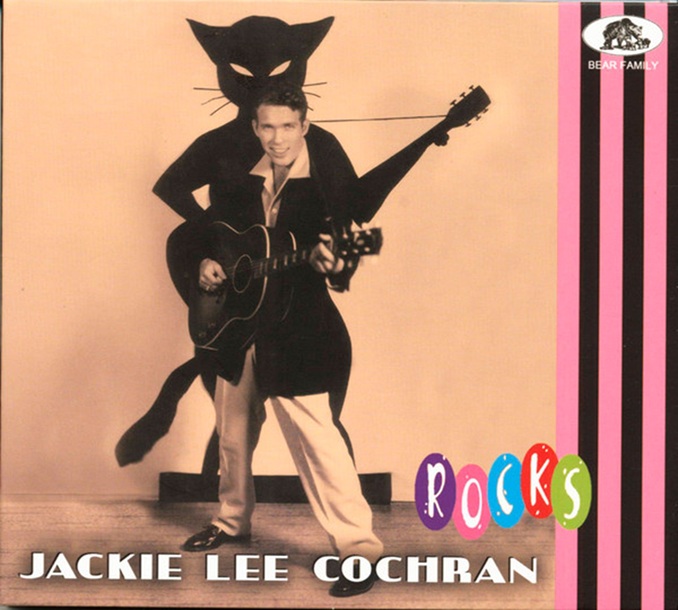
ROCKS/
JAMES BROWN
Ik zal hier wel weer voor aan het rock 'n' roll kruis genageld worden,
maar ik hoor graag soul muziek. Of in ieder geval uptempo soul met
veel blazers. Laat ik het zo stellen: was ik jong geweest in het midden
van de jaren '60 dan zou ik een fan van soul zijn geweest. En van
The Rolling Stones én van Creedence Clearwater Revival, maar
dat is weer een heel ander verhaal. James Brown wordt beschouwd als
de Godfather Of Soul, maar ik hoor al jarenlang vertellen dat ie eigenlijk
begon in de rock 'n' roll. Die kans is niet onbestaande omdat élke
zwarte artiest van een zekere leeftijd begon in de rock 'n' roll.
Aangezien ik bij Boppin' Around de overlijdensrubriek bij hou, check
ik automatisch het muzikale verleden van elke artiest die komt te
gaan vanaf de leeftijd van 75 jaar. Maar ter zake: Soul Brother Number
One begon zijn carrière inderdaad reeds begin jaren '50, en
zijn muziek was in die dagen logischerwijs sterk beïnvloed door
groepen als Hank Ballard & the Midnighters, The Dominoes, The
Orioles, The 5 Royales (JB covert op deze CD hun stroll Think in een
sneller soul arrangement) en zelfs The Coasters (de stop-starter That
Dood It), met een flink infuus van doo-wop (I Feel That Old Age Coming
On, en bestaat er klassiekere doo-wop boogie dan Can't Be The Same
uit 1956? Je ziet zo de acrobatische danspasjes op je netvlies!) én
van gospel, maar ook met de energie van Little Richard. Zo is Chonnie-On-Chon
uit 1956 dat refereert naar Hank Ballard's heldin Annie en haar tantie
Fannie pure zwarte rock 'n' roll uit de Little Richard school, en
ook de rocker Baby Cries Over The Ocean, de uptempo stroll There Must
Be A Reason en het medium tempo Don't Let It Happen To Me mogen er
wezen. Sommige van de meer rockende songs als This Old Heart doen
me inderdaad denken aan The 5 Royales, Good Good Lovin' gaat richting
twist en zou dan ook gecoverd worden door Chubby Checker. Medium tempo
in dezelfde stijlen is Tell Me What I Did Wrong. Opvallend zijn JB's
herwerking in 1961 van Shout van The Isley Brothers tot Shout And
Shimmy, en Let's Make It dat eigenlijk de Bill Doggett instrumental
Honky Tonk is met tekst.
I'll
probably get crucified for saying this, but I like soul music. At
least uptempo soul with lots of brass. Let's put it this way: if I
would have been young in the mid sixties, I would have been a soul
fan. As well as a fan of The Rolling Stones and Creedence Clearwater
Revival, but that's an entirely different story. James Brown was nicknamed
the godfather of soul, but for years I've been hearing rumours hat
he actually started out in rock ‘n’ roll. Which is not
impossible, for every black artist of a certain age started out in
rock ‘n’ roll. I'm the one keeping track of the obituaries
at Boppin' Around, so I automatically check the musical past of every
artist from the age of 75 onwards who passes away. But I digress:
Soul Brother Number One did indeed start his career in the early fifties,
and logically back in those days his music was strongly influenced
by groups like Hank Ballard & the Midnighters, The Dominoes, The
Orioles, The 5 Royales (on this CD JB covers their stroll Think in
a faster soul arrangement) and even The Coasters (the stop-starter
That Dood It), with a hefty infusion of doo-wop (I Feel That Old Age
Coming On, and is there a more classic doo-wop boogie out there than
1956's Can't Be The Same? You can see the acrobatic dance moves right
before your eyes) and gospel, but also with the energy of Little Richard.
Chonnie-On-Chon from 1956 for example which references Hank Ballard's
heroine Annie and her aunt Fannie, is pure black rock ‘n’
roll straight out of the Little Richard school, and the rockin' Baby
Cries Over The Ocean, the uptempo strollin' There Must Be A Reason
and the medium tempo Don't Let It Happen To Me are also impressive.
Some of the rockinest songs like This Old Heart indeed remind me of
The 5 Royales, Good Good Lovin' leans towards twist and would later
be covered by Chubby Checker. A medium tempo song in the same style
is Tell Me What I Did Wrong. Noteworthy are JB's 1961 reworking of
The Isley Brothers' Shout titled Shout And Shimmy, and Let's Make
It which is in fact the Bill Doggett instrumental Honky Tonk with
lyrics. |
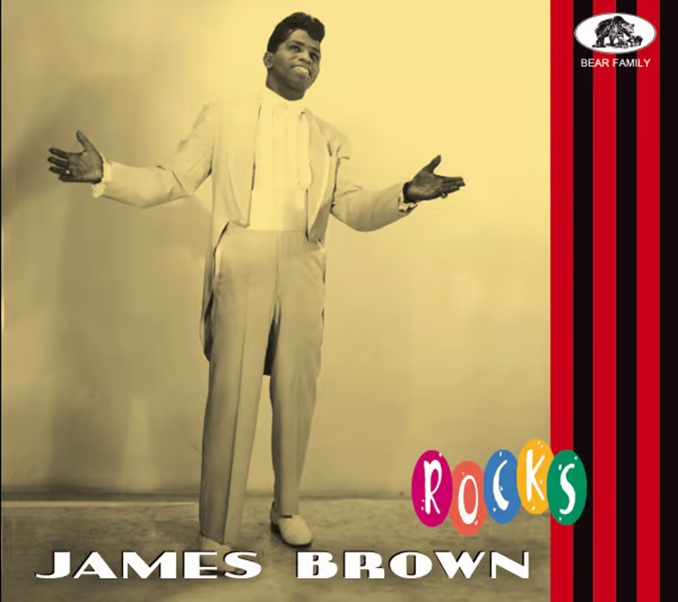
4 maart 2026
CD Recensies
KEEPING
THE SHOW ON THE ROAD/ THE JIVE ACES
Na bijna twintig albums staan er geen verrassingen meer op de recentste release van The Jive Aces die geruggesteund door dianetics, een eufemisme voor scientology, sinds 1998 onvermoeibaar hun goedgemutste swing jive boodschap de wereld ronddragen. De grootste verrassing is dat het geen live album is zoals ik verwachtte op basis van de titel. Hebben ze eigenlijk al een live album? Zoals altijd en alles bij The Jive Aces is Keeping The Show On The Road glad maar goed, en even beschaafd, klassenvol en afgeborsteld als hun tot in de puntjes verzorgde kleurrijke maatpakken. Ook nu bevat de tracklist opnieuw veel klassiekers, onder meer Big Noise From Winnetka met zijn eindeloze contrabas solo, St. James Infirmary, een vokale versie van Night Train, Rockin' is Our Business ietsje trager dan The Treniers, het van barrelhouse piano en charleston trompet voorziene It Don't Mean A Thing, het jivende Bim Bam van Louis Prima's saxofonist Sam Butera, en het accordeonwalsje That's Amore van Dean Martin dat na één minuut Louis Prima wordt. Minder voor de hand liggen de uptempo swingversie van La Vie En Rose van Edith Piaf met accordeon, het jazzy instrumentale thema van The Pink Panther, de steeds onstuimiger wordende lounge versie van Clementine gebaseerd op het arrangement van Bobby Darin inclusief een paar woorden in't Italiaans, de instrumentale Russische hoempapa Dark Eyes die met zijn muzikale anarchie en solos op contrabas en ukelele wat doet denken aan Spike Jones, en de piano boogie Bumble Boogie gebaseerd op Nikolai Rimsky-Korsakov's Vlucht Van De Hommel uit zijn opera De Geschiedenis Van Tsaar Saltan uit 1899-1900, voor het eerst tot een boogie woogie gedraaid door orkestleider Jack Fina in de jaren '30. Het uptempo strollende duet Baby You Got What It Takes met Bill Haley's jongste dochter Gina Haley staat ook op hun gezamenlijke CD I've Got A Feeling. De hoofdingrediënten zijn bekend: tenorsax, trombone, piano, contrabas en drums, een vleugje vrolijke jazz en veel goede luim. Frontman Ian Clarkson is nog steeds de kruising tussen Louis Prima, Dean Martin en Maurice Chevalier, en daarin is hij de beste ter wereld. Van mij mogen ze die wereld nog 35 jaar verblijden, nog twintig albums uitbrengen en nog vaak naar Nederland komen. Ook uit op vinyl GARLP002. Info: www.jiveaces.com (Frantic Franky)
After
nearly twenty albums threr's no surprises on the latest release from
The Jive Aces who, backed by dianetics, a euphemism for scientology,
have been tirelessly spreading their cheerful swing jive message all
over the world since 1998. In fact the biggest surprise is that it's
not a live album as I expected from the title. Did they ever release
a live album? As always and everything with The Jive Aces Keeping
The Show On The Road is smooth but good, and as civilized, classy
and spotless as their colorful suits. Once again the tracklist contains
many classics, including Big Noise From Winnetka with a never ending
double bass solo, St. James Infirmary, a vocal version of Night Train,
Rockin' is Our Business slightly slower than The Treniers, It Don't
Mean A Thing with barrelhouse piano and charleston trumpet, the jiving
Bim Bam from Louis Prima's saxophonist Sam Butera, and Dean Martin's
accordion waltz That's Amore which after one minute turns into Louis
Prima. |
LOVE,
LOSS & THE THOUSAND-YARD STARE/ STUART WARBURTON
Stuart
Warburton is de frontman-zanger-mondharmonicaspeler-saxofonist van
The Rhythmaires uit Manchester, of beter gezegd wàs dat, want
we hebben het over eind jaren '80 toen The Rhythmaires een van de
betere nieuwe Britse bands waren met binnen de neo toch een geheel
eigen aparte sound gebaseerd op bluesbop op smaak gebracht met swing.
Hun releases, vooral de Nervous LP Losin' Out uit 1987 en de Sfax
10 inch Girl Trouble uit 1997, naderhand aangevuld met een paar releases
met onuitgegeven werk, worden nog steeds hogelijk gewaardeerd door
de liefhebbers. Warburton is evenwel niet op zijn lauweren blijven
rusten of eindeloos die Rhythmaires erfenis blijven uitpersen, en
je moet al héél hard je best doen om hem nog eens als
The Rhythmaires op een podium te krijgen - de laatste keer was begin
2024 voor een viertal optredens in Nederland en Duitsland. Warburton
is daarentegen wel altijd muziek blijven maken, en dat doet hij nog
steeds. Ik ken de man niet persoonlijk maar volg hem op Facebook,
en daaruit onthoud ik het portret van een einzelganger in de zin dat
ie vaak op zijn eentje optreedt als singer-songwiter, dat ie vaak
alleen met het openbaar vervoer rondreist door Europa van Nederland
tot Portugal, en dat ie in zijn auto naar heel uiteenlopende muziek
luistert.
Stuart Warburton is the frontman, singer, harmonica player and saxophonist
of The Rhythmaires from Manchester, or rather was, because we're talking
about the late eighties now when they ruled as one of the better new
British bands with their own rather unique sound within the neo genre,
based on blues bop flavored with swing. Their releases, especially
the 1987 Nervous LP Losin' Out and the 1997 Sfax 10 inch Girl Trouble,
later followed by a string of previously unreleased recordings, are
still very popular among their fanbase. Warburton did however not
rest upon his laurels or endlessly exploit the Rhythmaires legacy,
and you have to do your darnest best to get him back on stage as The
Rhythmaires — the last time was in early 2024 for four shows
in the Netherlands and Germany I believe. Yet he's always continued
to make music, and in fact still does. I don't know him personally,
but I follow him on Facebook, and from that I get the image of a loner
in the sense that he often performs all by himself as a singer-songwriter,
that he often travelson his own by public transport through Europe
from the Netherlands to Portugal, and that he listens to a wide variety
of music in his car. |
25 februari 2026
PHANTOM
ROCKERS: THIS NIGHT
Nummer drie in de reeks die allerlei songs aan elkaar verbindt via
alter egos en "spookrockers" die onder pseudoniemen of anoniem
op elkaars platen meespelen. Zo speelt op Jack Huddle's relaxte rockabilly
Starlight Buddy Holly mee en dat is duidelijk te horen in de gitaarsolo.
Het nummer werd al dan niet mede geschreven door Holly's producer
Norman Petty en dat is natuurlijk makkelijk wanneer je je liedje baseert
op een oud kinderrijmpje. Er bestaan trouwens meerdere songs geschreven
op basis van die Starlight Starbright. Andere kinderrijmpjes zijn
Mary Had A Little Lamb en Little Bo Peep en die zitten dan weer verwerkt
in de zwart klinkende rockabilly Tag Along van Rocket Morgan.
Here's
number three in the series that connects songs via alter egos and
“phantom rockers” who play on each other's records under
pseudonyms or anonymously. An example: as clearly audible in the solo
it's Buddy Holly playing the guitar on Jack Huddle's relaxed rockabilly
Starlight, a song which may or may not have been co-written by Holly's
producer Norman Petty, an easy thing when your song is based on nursery
rhyme. Hence there are more songs out there based on Starlight Starbright.
Other nursery rhymes are Mary Had A Little Lamb and Little Bo Peep
and those were incorporated into Rocket Morgan's black sounding rockabilly
song Tag Along. |
COOTER
BUG: BOSS BLACK INSTRUMENTALS Vol. 4
Zwarte instrumentals zijn logischerwijs gebaseerd op de steunpilaren
van de zwarte rock 'n' roll, in de eerste plaats de rhythm 'n' blues
gitaar en de saxofoon. Zij vormen dan ook de hoofdmoot van deze 27
tracks. In het beste geval leidt dat tot rockers als Doublemint van
Ike Turner op wie je altijd kan rekenen, maar soms wordt het gewoon
één grote jam (Dyna Flow van Albert King). Soms gaat
dat vergezeld van een piano (Back To Back van Paul Williams) of een
orgeltje (Willie Wright's vegas grind Gibble Gobble - ook op No Parking
van The Ivory Hunters kan u zich ritmisch ontkleden), soms zit er
madison en andere danspasjes in, soms gaan ze jazzy zoals Gus Jenkins
in Cutting Out. Vaak hebben de nummers een groovy early sixties vibe,
bijvoorbeeld El Paso Rock van Long John Hunter en Just About Daybreak
van The Mighty Trojans. Dezelfde basisbezetting van rhythm blues gitaar
+ sax + orgel kan dan ook heel diverse richtingen uit gaan: hoor hoe
verschillend Dave Hamilton (Cooter Bug), Jimmy Forrest (Night Walk)
en James Brown (jawel, dé James Brown) & the Famous Flames
(Cross Firing) zijn.
Black instrumentals are obviously rooted in the pillars of black rock
‘n’ roll, rhythm ‘n’ blues guitar and saxophone.
These therefore constitute the bulk of these 27 tracks, at its best
resulting in rockers like Doublemint by the always dependable Ike
Turner, but it can also turn into one great big jam (Albert King's
Dyna Flow). Sometimes the guitar and sax are accompanied by piano
(Paul Williams' Back To Back) or keyboards (Willie Wright's vegas
grind Gibble Gobble, and one can also rhythmically undress to The
Ivory Hunters' No Parking), sometimes there's madison and other dance
moves involved, sometimes they go jazz like Gus Jenkins in Cutting
Out. The tunes often have a groovy early sixties vibe, for example
Long John Hunter's El Paso Rock and The Mighty Trojans' Just About
Daybreak. This means that the same basic line-up of rhythm blues guitar
+ sax + organ can go in very different directions: hear how different
Dave Hamilton (Cooter Bug), Jimmy Forrest (Night Walk) and James Brown
(yes, thé James Brown) & the Famous Flames (Cross Firing)
are. |
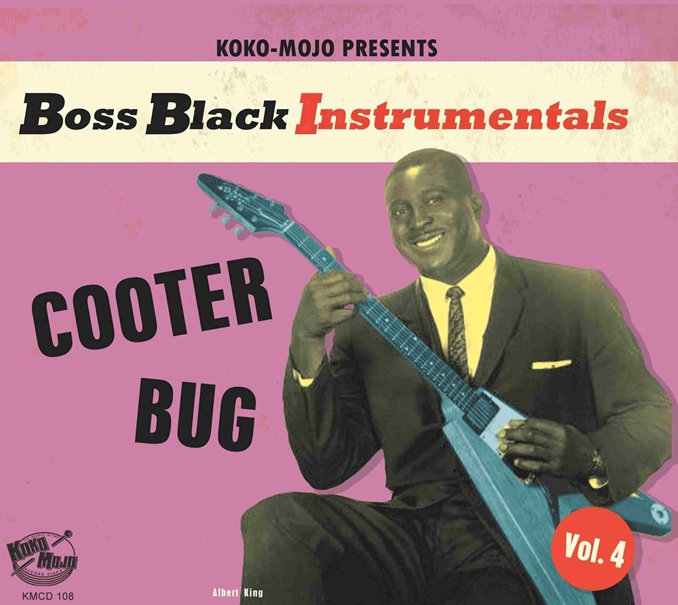
18 februari 2026
ROCK-A-BALLADS Vol. 2
Laat mij de wildste rockers horen, en gegarandeerd hebben ze ook trage
nummers opgenomen. Bewijsstuk nummer 1: is er ooit een betere balladeer
geweest dan Gene Vincent (het delicate I Sure Miss You)? Bewijsstuk
nummer 2: Love Me Van The Phantom. Bestaat er een maniakaler fifties
nummer? Op de B-kant stond de doorleefde rock-a-ballad Whisper Your
Love. Bewijsstuk nummer 3: Mel Robbins' hitsige Save It, met op de
ommekant de plechtige ballade To Know You. I rest my case, edelachtbare,
want u kan ze alle drie beluisteren op het tweede deel van Rock-A-Ballads,
samen met nog 28 andere trage songs uit 1956-1964. Het medium tempo
van de rock-a-ballad hangt tussen de rock en de ballade in en bevat
vaak toch enige vorm van ritme (Cold Dark Night van Geo Lester is
zo snel dat het honky tonk wordt), dus is deze CD niet zozeer een
verzameling slows en ballades maar een overzicht van alle mogelijke
manieren en stijlen waarop trage nummers kunnen uitgevoerd worden,
van pop (Oh Lonely Heart van Jerry Reed, het destijds onuitgebrachte
Waitin' van halve Cricket Niki Sullivan dat pas vorig jaar via Bear
Family boven water kwam) over blanke doo-wop (Do Da Da Do van The
Leonard Brothers) tot swamp pop (Tell Me van Jerry Raines & the
Vikings). Andere nummers hellen meer over naar de melodieuze kant
van de rock zoals What's The Use van Leon McAuliffe & his Cimarron
Boys, géén western swing maar ouderwetse croonerpop.
Klassiekers ontbreken niet: Young Love van Sonny James, Ritchie Valens'
liefdesverdriet Donna, het dromerige All I Have To Do Is Dream van
The Everly Brothers, de swamp popper This Should Go On Forever van
Rod Bernard. Een andere bekende naam is Charlie Feathers met When
You Decide. Let
me hear the wildest rockers, and I'll guarantee they've also recorded
slow songs. Exhibit number 1: has there ever been a better balladeer
than Gene Vincent (the delicate I Sure Miss You)? Exhibit number 2:
Love Me by The Phantom. Is there a more manic fifties song? On the
flip was the heartfelt rock-a-ballad Whisper Your Love. Exhibit number
3: if you turn over Mel Robbins' horny Save It you hear the solemn
ballad To Know You. Your honour, I rest my case, for you can listen
to all three on the second part of Rock-A-Ballads, along with 28 other
slow songs from 1956-1964. The medium tempo of the rock-a-ballad lies
in between rock and ballad and often contains some form of rhythm
(Geo Lester's Cold Dark Night is so fast that it becomes honky tonk),
so this CD is not so much a collection of slow songs and ballads as
an overview of all the possible ways and styles in which slow songs
can be performed, from pop (Jerry Reed's Oh Lonely Hear, the unreleased
Waitin' by half-Cricket Niki Sullivan which only surfaced last year
thanks to Bear Family) over white doo-wop (The Leonard Brothers' Do
Da Da Do) to swamp pop (Jerry Raines & the Vikings' Tell Me).
Other songs lean more towards the melodic side of rock such as Leon
McAuliffe & his Cimarron Boys' What's The Use, not western swing
but old fashioned crooner pop. The CD includes several classics: Young
Love by Sonny James, Ritchie Valens' broken love affair with Donna,
The Everly Brothers' ethereal All I Have To Do Is Dream, Rod Bernard's
swamp popper This Should Go On Forever. Another well known name is
Charlie Feathers with When You Decide. |
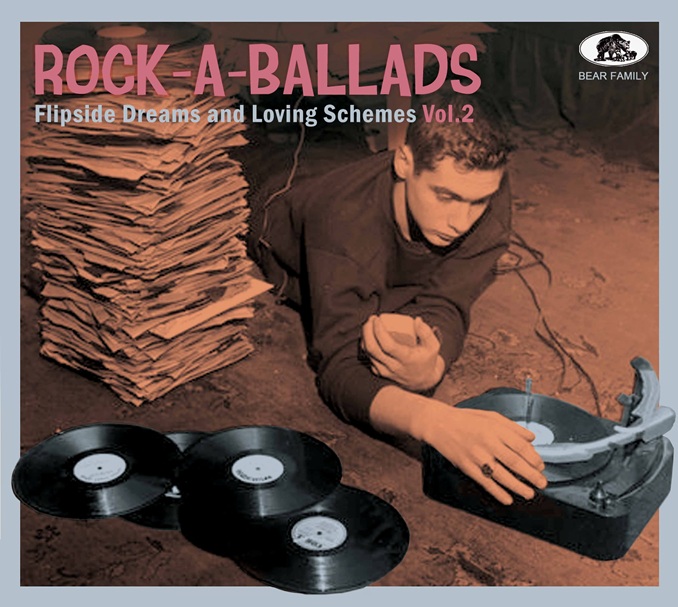
ROCKIN'
COUNTRY STYLE VOLUME 3
Velen gaan vanuit de rock 'n' roll de blues verkennen, ik kwam vanzelf
uit bij de country via de Boppin' Hillbilly reeks van Cees Klop, een
serie hillbilly LP’s op Charly Records en op basis daarvan een
heel pak Bear Family CD’s van individuele artiesten. Die liefde
is nooit overgegaan en een reeks als deze Rockin' Country Style is
dan ook balsem voor mijn rockabilly ziel. De 33 tracks op volume 3
gaan van gezellig gezapig medium tempo (Jimmy Ballard's cover van
het zwarte I Want A Bowlegged Woman van Bull Moose Jackson als een
country versie van Bill Haley) over snelle chicken pickin' (Crazy
Mixed Up Blues van Jimmy Boyd die later huwde met Bat Girl Yvonne
Craig) tot boppende proto rockabilly (Lattie Moore zou Juke Joint
Johnny uit 1953 drie jaar later dan ook onder de titel Juke Box Johnnie
heropnemen als pure rockabilly). De reis bestrijkt het hele gamma
aan country stijlen zoals jazzy western swing (Rusty MCDonald's Don't
Say I'm Sorry Anymore), honky tonk (Gentlemen Prefer Blondes van Eddie
Noack & the Roadbuddies) en boogie woogie (O Mabel Where Can You
Be van Aaron (Blackie) Boudreaux & the Rhythm Valley Playboys).
Many people go from rock ‘n’ roll to blues music, I got
sucked down the country rabbit hole thanks to Cees Klop's Boppin'
Hillbilly series, a series of hillbilly LPs on Charly Records, and
from there on a whole bunch of Bear Family single artists CDs. This
love never faded, and a series like Rockin' Country Style is therefore
balm to my rockabilly soul. The 33 tracks on volume 3 range from cozy,
leisurely medium tempo (Jimmy Ballard's cover of Bull Moose Jackson's
black I Want A Bowlegged Woman as if he were a country version of
Bill Haley) via fast chicken pickin' (Crazy Mixed Up Blues by Jimmy
Boyd who went on to marry Bat Girl Yvonne Craig) to boppin' proto
rockabilly (Lattie Moore would re-record his 1953 Juke Joint Johnny
three years later under the title Juke Box Johnnie as pure rockabilly).
The journey covers the entire spectrum of country styles such as jazzy
western swing (Rusty MCDonald's Don't Say I'm Sorry Anymore), honky
tonk (Gentlemen Prefer Blondes by Eddie Noack & the Roadbuddies)
and boogie woogie (O Mabel Where Can You Be by Aaron (Blackie) Boudreaux
& the Rhythm Valley Playboys). |
11 februari 2026
Vinyl/ CD Recensie
JAKE
CALYPSO & BUBBA FEATHERS
Bijna dertig jaar na zijn overlijden op 66-jarige leeftijd aan longkanker
kan je in de rockabilly nog steeds niet om Charlie Feathers heen.
Met singles op Sun, Meteor, King en Kay werd hij een van de sleutelfiguren
in Memphis, deels door het legendarische aureool dat hij zichzelf
toemat, zorgvuldig cultiveerde en waarschijnlijk tenslotte ook zelf
geloofde ("ik heb Elvis alles geleerd"), deels door zijn
imago van een artiest die niet kon lezen noch schrijven maar wel kon
rocken, en deels door het feit dat ie heel zijn leven rockabilly is
blijven spelen. Charlie Feathers ging in de jaren '60 niet op de country
tour, omdat zijn muziek altijd al op het slappe koord tussen rockabilly
en country balanceerde. Charlie Feathers is niet meer, maar zijn zoon
Bubba (is er een meer southern name denkbaar?) die vanaf begin jaren
'70 leadgitaar voor hem speelde is er nog wel, en af en toe komt ie
de nummers van zijn vader ten gehore brengen voor een hongerig Europees
publiek. Almost thirty years after
his death at the age of 66 from lung cancer Charlie Feathers remains
one of the most influential names in rockabilly. With 45s on Sun,
Meteor, King and Kay he became one of the key figures in Memphis,
partly due to the legendary aura he created, carefully cultivated
and in the end probably believed himself (“I taught Elvis everything”),
partly due to his image as an artist who could neither read nor write
but could rock pretty darn good, and partly due to the fact that he
continued to play rockabilly his entire life. Charlie Feathers did
not go country in the sixties because his music had always balanced
on the tight rope between rockabilly and country. Charlie Feathers
is no longer with us, but his son Bubba (is there a more southern
name?) who played lead guitar for him from the beginning of the seventies
right up till the end, is, occasionally crossing the pond to perform
his father's songs for an eager European audience. |
4 februari 2026
CD Recensies
THAT’LL
FLAT GIT IT Vol. 52: ROCKABILLY & ROCK ‘N’ ROLL FROM
THE VAULTS OF MAR-VEL' & GLENN RECORDS
Mar-Vel' was het éénmans label van de uit Indiana afkomstige
Harry Glenn (vandaar de naam van Mar-Vel' sublabel Glenn) die tot
diep in de jaren '70 zijn waar aan de man bracht vanuit zijn bestelbusje.
Mar-Vel' was al eerder het onderwerp van CD releases (ik denk aan
Get With The Beat: The Mar-Vel' Masters op Rykodisc uit 1989, de One
Day Music dubbel CD Jump Baby Jump: The Mar-Vel' Records Story en
de Fantastic Voyage triple CD Hoosier Daddy: Mar-Vel' And The Birth
Of Indiana Rockabilly, beide verschenen in 2014), bestond van 1949
tot 1969 of daaromtrent en bracht zo'n 140 à 175 singles uit
(de tellingen verschillen) met de nadruk op country. Logischerwijs
staat er veel country op deze CD, maar uiteraard opteerde samensteller
Nico Feuerbach voor country met een drumbeat op het randje van de
rockabilly als I Need Some Lovin' van Harold Allen en Naughty Girls
van Jack Bradshaw, relaxte country swing (Move Over Rover van Bill(y)
Hall in de heropname uit 1963) en de Tennessee Ernie Ford imitaties
van Jim Gatlin (The Way You're Treating Me, Would It Matter At All).
Root Beer van The Law Brothers is een te gek niet-alcoholisch antwoord/parodie
op White Lightning van George Jones, alleen is het een cover van een
albumtrack van... George Jones zelf! Uiteraard loopt dit alles naadloos,
vrolijk en onbeschaamd door elkaar. Is Ray Lynn (het early sixties
klinkende Mean Mean Woman) truckin' country met honky tonk piano,
of maakt de boogie gitaar er rock 'n' roll van? Wie het weet mag de
hand in de lucht steken en de horlepiep dansen op Row Boy Sink Or
Swim van Slim O'Mary & the Southerneers. Mar-Vel' zat evenwel
zo diep geworteld in de country dat ze in 1956 nog platen uitbrachten
met accordeon. Zo is Jump Baby Jump van Harry Carter & the Dixie
Rhythmaires het blanke equivalent van jump blues, laat ik het hillbilly
jump noemen, met naast de vibrerende elektrische gitaar en een drumsolo
toch nog steeds een accordeon solo. Ook hun Rhythm In My Soul bevat
accordeon en klinkt als een poging tot rock 'n' roll door een dansorkest
met als resultaat primitieve medium tempo bop. Twee jaar later was
zowel de accordeonist als de"Dixie" in hun naam verdwenen,
het sympathieke I Don't Want You was beschaafder in een variatie op
de Money Honey structuur, en You Made Me Love You Baby is met zijn
achtergrondkoortje helemáál nette rock 'n' roll, maar
toch ook nog met steel. Bob Burton klinkt in Tired Of Rockin' als
een country zanger die zijn best doet Bill Haley te zijn (zijn Boogie
Woogie Baby Of Mine is medium tempo boogie swing), en Bobby Sisco
kennen we van de rockabilly single Go Go Go / Tall Dark And Handsome
Man op Chess Records. Voor Harry Glenn nam hij boppende hillbilly
met flitsende steel op (Honky Tonkin' Rhythm) én een banjobilly
nummer, Now I'm Free.
Mar-Vel' Records was the one man operation of Indiana native Harry
Glenn (hence the name of Mar-Vel' sublabel Glenn) who sold his wares
well into the seventies out of the trunk of his van. Mar-Vel' has
already been the subject of several CD releases (I'm thinking of Rykodisc's
1989 Get With The Beat: The Mar-Vel' Masters, the One Day Music double
CD Jump Baby Jump: The Mar-Vel' Records Story, and the Fantastic Voyage
triple CD Hoosier Daddy: Mar-Vel' And The Birth Of Indiana Rockabilly,
both from 2014). Mar-Vel' existed from 1949 to 1969 or thereabouts
and according to estimates released somewhere between 140 and 175
singles (the figures vary) with the emphasis on country music. Logically
there is a lot of country music on this CD, but compiler Nico Feuerbach
obviously opted for country music with a drumbeat on the edge of rockabilly
like Harold Allen's I Need Some Lovin' and Jack Bradshaw's Naughty
Girls, relaxed country swing (Bill(y) Hall's own 1963 re-recording
of Move Over Rover) and Jim Gatlin's Tennessee Ernie Ford imitations
(The Way You're Treating Me, Would It Matter At All). Root Beer by
The Law Brothers is a great non-alcoholic answer/parody to George
Jones' White Lightning, except that it's actually a cover of an album
track by... George Jones himself! All of this of course seamlessly,
cheerfully and shamelessly blends together. Is Ray Lynn (the early
sixties sounding Mean Mean Woman) truckin' country with honky tonk
piano, or does the boogie guitar make it rock ‘n’ roll?
If you know the answer, raise your hand and dance the jitterbop to
Slim O'Mary & the Southerneers' Row Boy Sink Or Swim. |
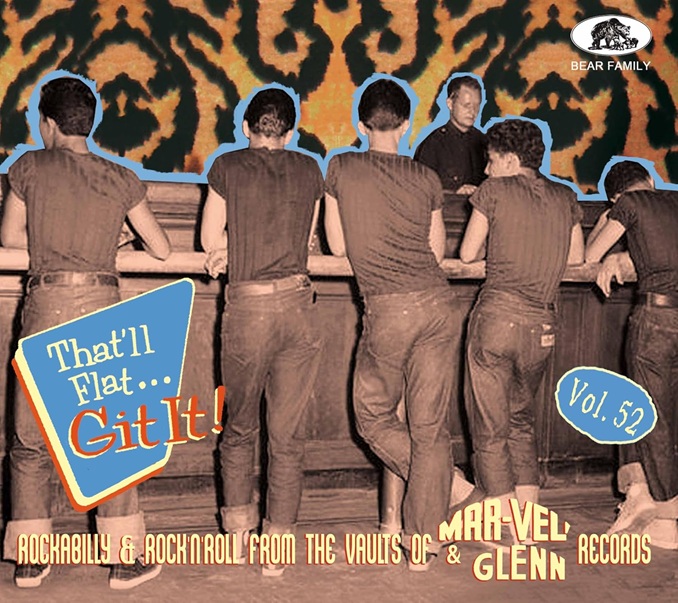
JIVE-A-RAMA
VOLUME 5
Wie
30 typische jivers verwacht komt bedrogen uit want Jive-A-Rama 5 biedt
heel gevarieerde nummers in een hele variëteit aan rock 'n' roll
genres. We horen zowel doo-wop (Shut Your Mouth van The Eboniers,
Come On Baby van de Frankie Lymon-achtige Youngtones, Why Why Why
van Scott Stevens & the Cavaliers), stop-starters (Crazy Crazy
Baby van Chuck Howard), big label klinkende billy en rock 'n' roll
(Big Deal van The Skee Brothers, You're Gone Baby van Jimmy Lloyd,
Salt And Pepper van Ronnie Summers) en zwarte swing boogie met zangeres
Mitzi Mars (Roll 'Em) als rechtdoor pianorockers met Head Over Heals
In Love van Don Wayne en Old Black Joe van Jerry Adams. Dat laatste
kennen we natuurlijk van Jerry Lee Lewis, net als Great Balls Of Fire,
hier te horen in de vurige versie van zangeres Georgia Gibbs, zeer
zeker de moeite door haar muzikale inleving, de hard aangeslagen piano
en de scherpe gitaar. Paul Evans' cover van Fats Domino's I'm Walkin'
scoort dan weer hoog op onze coverschaal omdat hij juist dicht bij
het origineel blijft, wat je niet verwacht van de hitmaker van het
melige Seven Little Girls Sitting In The Back Seat. Evans is nu 87,
dus haal 'em naar Viva Las Vegas! If
you're expecting 30 typical jivers you'll be disappointed because
Jive-A-Rama 5 offers a wide variety of songs in a whole range of rock
‘n’ roll genres. We hear doo-wop (Shut Your Mouth by The
Eboniers, Come On Baby by the Youngtones in the vein of Frankie Lymon,
Why Why Why by Scott Stevens & the Cavaliers), as well as stop-starters
(Crazy Crazy Baby by Chuck Howard), big label sounding billy and rock
‘n’ roll (Big Deal by The Skee Brothers, You're Gone Baby
by Jimmy Lloyd, Salt And Pepper by Ronnie Summers), black swing boogie
with female singer Mitzi Mars (Roll 'Em) and straight forward piano
rockers with Don Wayne's Head Over Heels In Love and Jerry Adams'
Old Black Joe. We know the latter of course from Jerry Lee Lewis,
as well as Great Balls Of Fire, heard here in the fiery version by
Georgia Gibbs definitely worth listening to thanks to her musical
empathy, the hard hitting piano and the sharp guitar. Paul Evans'
cover of Fats Domino's I'm Walkin' scores high on our cover scale
because it stays close to the original, which you wouldn't expect
from the hit maker of the corny Seven Little Girls Sitting In The
Back Seat. Evans is now 87 years old, so bring him over to Viva Las
Vegas! |
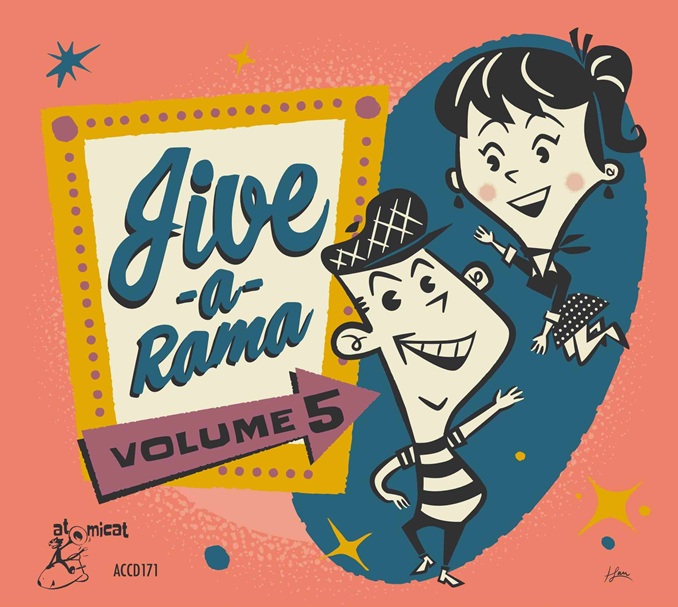
21 januari 2026
CHICAGO
ROCKS VOL. 1
De geschiedenis van de populaire muziek wordt vaak verteld aan de
hand van muzieksteden als Memphis, Nashville en New Orleans. Er zijn
al een aantal CD reeksen en boxen verschenen die de rock 'n' roll
belichten vanuit bepaalde steden en staten, maar Chicago associeer
ik in de eerste plaats met blues. Niet voor niets is er een bluestijl
die de Chicago blues wordt genoemd. Toch werd er in de industriestad
veel rock 'n' roll opgenomen en uitgebracht, wat logisch is aangezien
de infrastructuur van platenfirma’s en opnamestudio’s
er bestond, denk aan Chess en Vee-Jay . Deze Chicago Rocks Vol. 1
bevat niet minder dan 35 tracks 1956-1963 van artiesten geboren dan
wel opgegroeid dan wel opgenomen in Chicago in een gevarieerde mix
van ook blanke artiesten die noordwaarts trokken op zoek naar werk,
dansorkesten die op de rock 'n' roll trein sprongen en blanke doo-woppers.
Bekende namen zijn Elvis soundalike Ral Donner op een verrassend Bo
Diddley ritme waarvan de zanglijnen beelden van een western oproepen
waardoor I Got Burned de titeltrack van een Elvis film had kunnen
zijn, Ron Haydock & the Boppers met de rechtdoor piano/gitaarrocker
99 Chicks (83 meer dan Joe Clay) met de merkwaardige frase "99
chicks it'd just my luck not one of the girls that I'd wanna f - crash
op het cymbaal"), Eddy Clearwater met de Chuck Berry kopie Cool
Clear Water net iets primitiever dan Berry zelf, en Eddie Cash met
de gloedvolle uptempo stroll Stormy Weathers. Het bekendste nummer
is Jungle Rock uit 1958 dat in 1976 in Engeland én in Nederland
en België de top van de hitparade haalde! Wij hebben Hank Mizell
met zijn bob hoedje nog gezien op Toppop! The
history of popular music is often portrayed through music cities like
Memphis, Nashville and New Orleans. Multiple CD series and box sets
document rock ‘n’ roll from specific cities and states,
but I associate Chicago primarily with the blues. It's no coincidence
that there is a blues style called Chicago blues. Nevertheless a great
deal of rock ‘n’ roll was recorded and released in that
industrial city, which makes sense given the existing infrastructure
of record companies and recording studios, think of Chess and Vee-Jay.
This Chicago Rocks Vol. 1 contains no less than 35 tracks from 1956-1963
by artists born, raised or who recorded in Chicago, in a varied mix
including also white artists who moved north in search of work, dance
bands who jumped on the rock ‘n’ roll bandwagon and white
doo-woppers. |
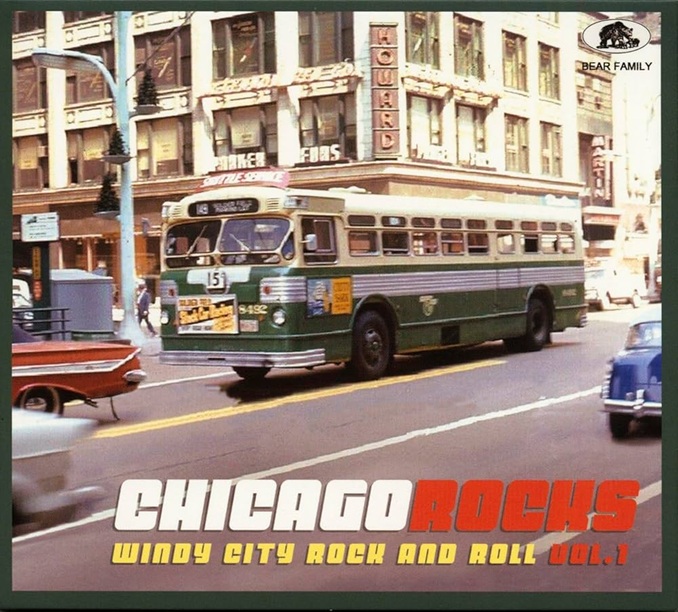
PHANTOM
ROCKERS: JAKE THE SNAKE
Et voilà, hier is nummer 2 in de Phantom Rockers reeks met
telkens 30 nummers waarvan de tracklisting op het eerste gezicht en
gehoor lukraak is maar die op allerlei vreemde manieren met elkaar
verbonden blijken, bijvoorbeeld door de muzikanten die erop meespelen
of omdat het bekende artiesten zijn die opnamen onder schuilnamen.
Hoe dat allemaal in elkaar haakt kan u lezen in de hoesnota’s.
Een voorbeeld: Carl Perkins speelde in 1961 gitaar op Randy Lee's
door Perkins geschreven beschaafde rocker met achtergrondkoortje Tell
Me dat niet hetzelfde nummer is als zijn jaren '50 home recording
Somebody Tell Me. Van de ene Sun legende naar de andere: Billy Lee
Riley passeert vier keer langs start maar ontvangt geen geld onder
het pseudoniem Skip Wiley (Fast Livin' klinkt als Ferlin Husky's komische
alter ego Simon Crum), als Darren Lee (het zwart klinkende early sixties
blazerswerkje I've Been Searching), als lid van The Spitfires met
Roland Janes op gitaar in de medium tempo gitaar/sax instrumental
Catfish (geen idee wat Riley erop doet) die klinkt als een doorslagje
van Modern Don Juan van Buddy Holly (Catfish verscheen onder Roland
Janes' naam ook in een snellere gitaar/piano/sax versie met als titel
Rolando), én Riley speelt mondharmonica op Bill Rice's Slim
Harpo styled bluesrocker It's All Your Fault. Over Buddy Holly gesproken:
van het van hem bekende Early In The Morning horen we hier de originele
meer gospel-achtige uitvoering door The Ding Dongs. In die groep zat
de componist van het liedje, Bobby Darin wiens naam niet mocht vermeld
worden omdat ie op een ander platenlabel zat. Toen die erop uit kwamen
brachten ze de Ding Dongs opname zelf uit onder de naam The Rinky-Dinks.
Et
voilà, here's the second volume in the Phantom Rockers series
containing another 30 songs whose tracklisting at first glance and
listen appears random but which turn out to be connected in all sorts
of strangest kind of ways, for example by the musicians who play on
them or because it's well known artists recording under pseudonyms.
In the liner notes you can read how it all fits together. An example:
in 1961 Carl Perkins played guitar on Randy Lee's civilized rocker
Tell Me, written by Perkins, featuring background vocals and not the
same song as his fifties home recording Somebody Tell Me. From one
Sun legend to another: Billy Lee Riley passes go four times but collects
no money under the pseudonym Skip Wiley (Fast Livin' sounds like Ferlin
Husky's comical alter ego Simon Crum), as Darren Lee (the black sounding
early sixties brass piece I've Been Searching), as a member of The
Spitfires with Roland Janes on guitar in the medium tempo guitar/sax
instrumental Catfish (no idea what Riley does on it) which sounds
like a carbon copy of Buddy Holly's Modern Don Juan (Catfish also
appeared under Roland Janes' name in a faster guitar/piano/sax version
titled Rolando), ànd he plays harmonica on Bill Rice's Slim
Harpo-styled blues rocker It's All Your Fault. Speaking of Buddy Holly:
instead of his fairly known Early In The Morning we hear the original
more gospel infused version by The Ding Dongs one of whom was the
song's composer Bobby Darin whose name couldn't be mentioned as he
was recording for another record label. When they found out they released
the Ding Dongs recording themselves under the name The Rinky-Dinks.
|
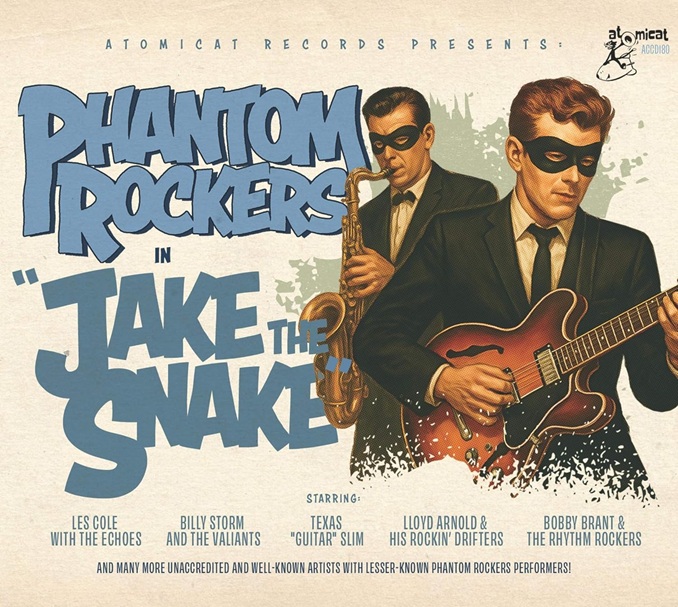
14 januari 2026
Vinyl Recensies
THE
AUTOMATIC FOOL/ CHERRY CASINO & THE GAMBLERS
Na
drie CD’s op Rhythm Bomb (Let's Play Around, Fat Mama's Daughter
en het "solo" Hi-No-Love) is het vierde album van Cherry
Casino & the Gamblers een 10 inch vinyl geworden, goed voor twaalf
nummers, en het feit dat die verschijnt op re-issue label Bear Family
(D) dat slechts zelden hedendaags werk uitbrengt zegt al veel over
de kwaliteit. U kent Cherry Casino & the Gamblers wel: de band
is een van de incarnaties van de kern gevormd door Axel Praefcke (zang,
gitaar), Michael Kirscht (gitaar) en Ike Stoye (sax). Drums en contrabas
wisselen nog al eens en zijn op dit album respectievelijk Gregor Gast
en Kevin Weber. Als Cherry Casino & the Gamblers exploreren ze
vooral de zwarte kant van de rock 'n' roll, met name door het gebruik
van saxofoon en rhythm 'n' blues gitaar. After
three CDs on Rhythm Bomb (Let's Play Around, Fat Mama's Daughter and
the “solo” Hi-No-Love), Cherry Casino & the Gamblers'
fourth album is a 10 inch vinyl with twelve songs, and the fact that
it's out on re-issue label Bear Family (D) which rarely releases contemporary
work says a lot about its quality. You know Cherry Casino & the
Gamblers: they're one of the incarnations of the core band formed
by Axel Praefcke (vocals, guitar), Michael Kirscht (guitar) and Ike
Stoye (sax). The drums and double bass change quite often and on this
album they're playedby Gregor Gast and Kevin Weber respectively. As
Cherry Casino & the Gamblers they mainly explore rock ‘n’
roll's black elements, particularly through the use of saxophone and
rhythm ‘n’ blues guitar. |
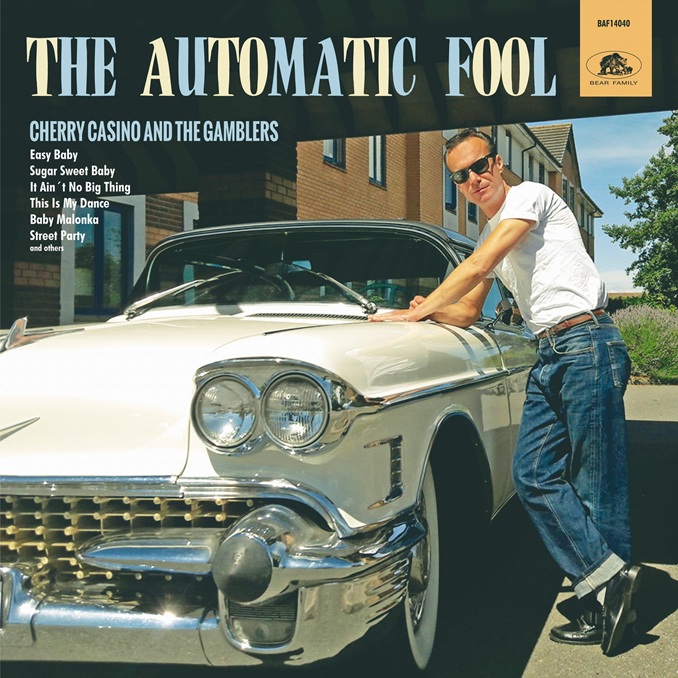
VINCE
& THE MOON BOPPERS
Dale Rocka & the Volcanoes' lead guitarist Vince Mannino (I) released three CDs as the singer-guitarist of Vince & the Sun Boppers and two years ago the 4 track El Toro vinyl EP Rockin' Down The Tracks (ET-15184) as Vince & the Moon Boppers. I don't know the reason for the name change: the three albums, Gone For Lovin' (Rhythm Bomb Records RBR 5830, 2016), Spinnin' Around (RBR 5851, 2017) and By Request (RBR 5881, 2018) are more desperate and rockabilly than the Sun sound, although Sun was definitely a big part of it, but both Moon Boppers EPs are in the same style as the The Sun Boppers albums. Rockin' Down The Tracks had four original songs, now there is one cover, If You Can't Rock Me, better known from Ricky Nelson than from The Strikes who in 1956 recorded it first. Mannino gives it a Johnny Burnette Rock ‘n’ Roll Trio reading, albeit with a more classic rockabilly guitar instead of distortion. The uptempo fingerpicking hillbilly bop guitar instrumental Vinnie's Bop is a showcase for Mannino's flying fingers. The title My Window Faces The North is obviously reminiscent of Bob Wills' My Window Faces The South but has nothing to do with that as it's not western swing but twangy fifties rockabilly with echoes of the Johnny Burnette Rock ‘n’ Roll Trio in the intro, while the twang is reminiscent of Johnny Horton. The last track, I'll Never Kiss Your Lips Again, aims at those of you who like to jump around wildly on the dance floor, the kind of song with half the band on their knees and the front row banging their hands on the stage. Just like Rockin' Down The Tracks this is another great EP, expertly produced by Ike Stoye at Lightning Recorders in Berlin, your guarantee of authenticity. Info: www.eltororecords.com and www.facebook.com/VinceManninoband (Frantic Franky) |
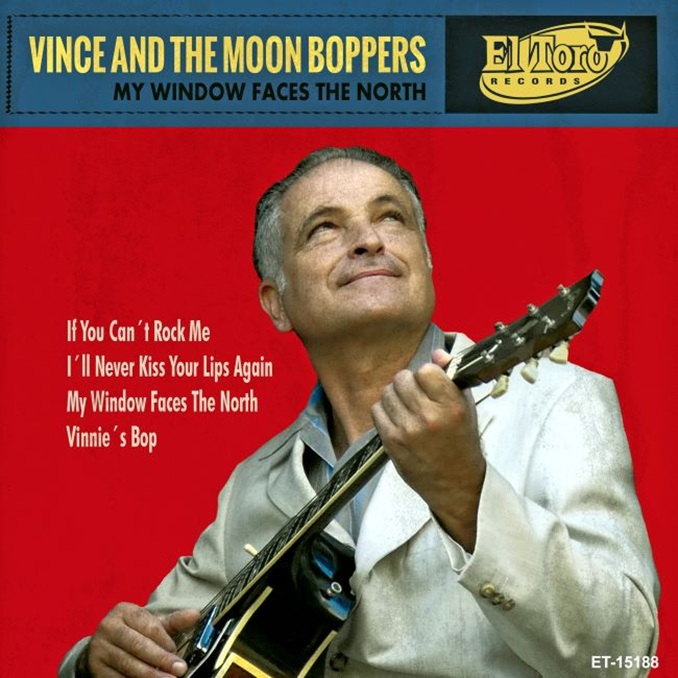
7 januari 2026
PHANTOM
ROCKERS: DON'T BUG ME BABY
Phantom
Rockers is a new CD series with 30 songs each compiled by Atomicat
cat Mark Armstrong (GB). At first glance the tracklistings appear
random, but several tracks are connected in all sorts of mysterious
ways. For example because of the musicians who play on them, or because
it's well known artists recording under pseudonyms. How it all fits
together is explained in the liner notes. Some of you will probably
know that Jack Hammer (the cheerful black vocal masterpiece Girl Girl
Girl) wrote (or didn't write) Great Balls Of Fire, that Rudy Gray
(the cozy hillbilly western swinger There's Gonna Be A Ball) was Rudy
Grayzell, that Danny Boy (the cool vocal doo-wop jiver Don't Go Pretty
Baby) aka Chuck “Tequila” Rio (the calmer but rather crazy
Bye Bye Baby) was the saxophonist of The Champs, that Pretty Boy (the
black screamers Bip Bop Bip and Rockin' The Mule) later became Don
Covay, and that Tom & Jerry (the Everly Brothers copy Dancin'
Wild) later became Simon & Garfunkel. It's however less obvious
that Red (Hot) Russell (the great jiver Stop) was one of The Rio Rockers
(the desperate Mexicali Baby), as is the fact that Johnny Todd in
his boppin' Pink Cadillac was Sammy Masters from the injun opus Rockin'
Redwing. Rockin' Redwing is not on the CD, by the way. We're not going
to reveal everything, but it's no secret that there was a high employee
turnover in doo-wop. We hear a number of black doo-wop tracks by groups
like The Five Echos (Broke), The Rainbows (Shirley), The Du-Droppers
(I Wanna Love You), and The Cliques (I'll Mess You Up), and Mark Armstrong
explains in detail who sang with whom. All these explanations and
detours are of course just an excuse to serve up a healthy dose of
rock ‘n’ roll in various styles like rural rockabilly
(Buzz Williams' Blue Suede Shoes curiously enough based more on Carl
Perkins than on Elvis, Bill Bowen & the Rockets' Meteor single
Have Myself A Ball), piano strollers (Little Girl Little Girl by The
Fairlanes) and guitar instrumentals (Red Hot Red by Young Guitar Red).
There's big band doo-wop swing with The Rams (Rock Bottom in the style
of The Treniers) and Wally Wilson (The Hunt), but also smooth country
swing such as Carl Smith's Oh Stop, released under the name of his
backing band the Tunesmiths. Tom & Jerry were an Everly Brothers
imitation, another Everly copy is Funny Honey by Two Don's who must
have thought they would have a better chance at success and glory
if they named themselves after the first name of half of The Everly
Brothers. Not! The whitesounding Cris Kevin & the Comics draw
inspiration from The Coasters in Have Gun Will Travel, based on the
1957-1963 western TV series of the same name, and in We're Gonna Roll
one Shorty Muggins rolls just as capably as Big Joe Turner. Green
Onions by studio group The Hi-Tones is a faithful cover of Booker
T & the MG's' classic keyboard instrumental. |
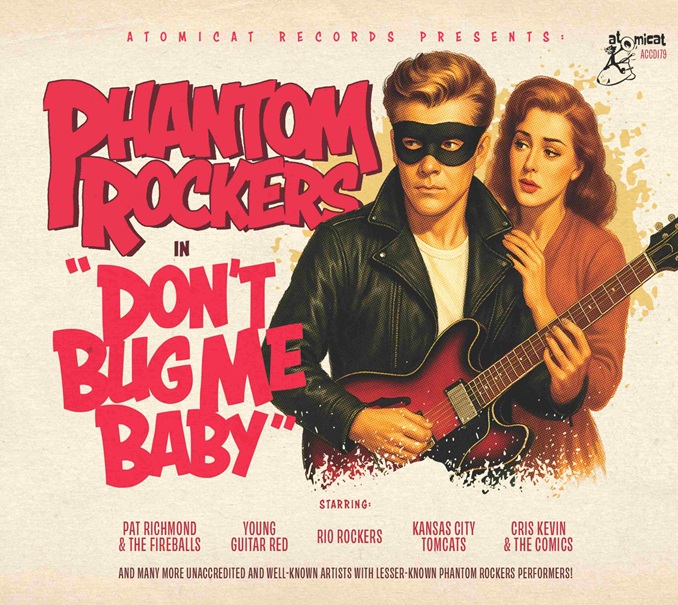
SIN
ON SATURDAY, PRAY ON SUNDAY VOLUME 5: ALL ABOARD
It
took me a while for everything to fall into place in Sin On Saturday
Pray On Sunday # 5. Not that I have a problem with the juxtaposition
of black, mainly blues oriented music and (black) gospel (seven out
of the 28 tracks 1937-1963), for the gospel served up here is as raw
as a cry straight from the soul can be. In it you can also hear the
link between vocal harmony and doo-wop, just listen to the background
vocals on the tracks by The Radio Four (I Feel The Spirit), The Nightingales
(Somewhere To Lay My Head) and The Christland Singers (I Know My Jesus
Is The Light Of The World). Bessie Griffin & the Consolators'
More Like Jesus sounds very much like rock ‘n’ roll singers
as Ruth Brown and LaVern Baker. In 1959 Baker covered Sister Rosetta
Tharpe's timeless gospel song Didn't It Rain, but on this CD we hear
the version of Mahalia Jackson whose name half a century ago was synonymous
with gospel as a form of jazz. Perhaps I should start to investigate
her life and work, as her performance of Didn't It Rain is impressive.
Incidentally not all songs about the Lord are about the Lord: Christine
Kittrell uses the Lord's name in vain in Lord Have Mercy (I'm So Lonely),
not gospel but pure rock ‘n’ roll with Little Richard
on piano and in the background choir. Little Richard himself is also
featured on the CD with Joy Joy Joy, a remarkable 1961 recording not
only because the lively choir behind him sounds more like a theater
musical than gospel, but also because the clearly audibly restrained
Little Richard cannot hide his enthusiasm, resulting in a catchy,
swinging song. |